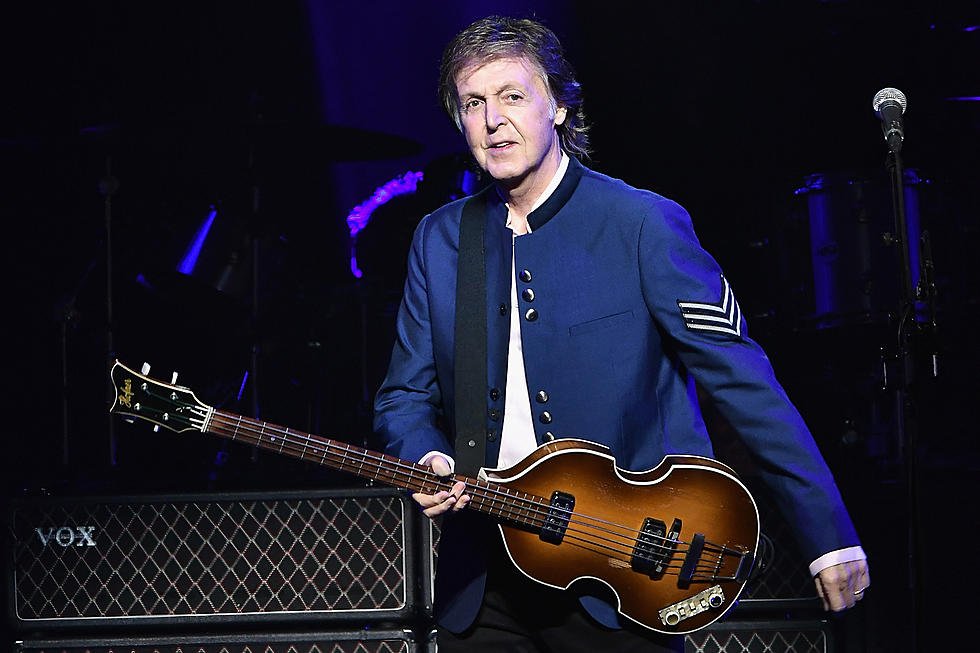
When people think of Paul McCartney, they think of stadium anthems, Beatles harmonies, and decades of pop-rock dominance. Country music rarely enters the conversation.
But for one brief, almost forgotten moment, McCartney quietly walked into country music’s capital — and walked out with his only country chart hit.
In the mid-1970s, McCartney was touring the U.S. with Wings, riding high on post-Beatles success. Nashville wasn’t on the itinerary for reinvention — it was a stopover. A pause. A place to sleep.
But Nashville has a way of pulling songs out of people.
After a show, McCartney found himself drawn into the city’s late-night creative gravity. Away from arenas and expectations, he sat down with an acoustic guitar and began writing — not chasing a hit, not trying to impress anyone.
Just telling a story.
The result was Sally G, a warm, understated tune inspired by a real woman he encountered during that brief stay. The song leaned into country storytelling: plainspoken lyrics, gentle humor, and a melodic simplicity that felt worlds away from Beatlemania.
“Sally G” was recorded quickly with Nashville musicians who understood restraint better than spectacle. There were no grand experiments, no layered production tricks.
Just feel.
McCartney later admitted the song surprised him. It wasn’t meant to be a statement. It wasn’t even meant to be special.
But when it was released as a B-side in the U.S., something unexpected happened.
Country radio embraced it.
The Chart Hit No One Expected
“Sally G” climbed onto Billboard’s Hot Country Songs chart — the only time Paul McCartney ever appeared there. Not with a crossover stunt. Not with a polished Nashville campaign.
Just one song, born from one night, finding the right ears.
Country listeners heard authenticity. They heard a songwriter respecting the genre instead of borrowing from it. And they responded.
For McCartney, a man who had conquered nearly every chart imaginable, this quiet achievement stood apart — not because it was big, but because it was accidental.
Why This Story Still Matters
In an era obsessed with strategy, branding, and algorithms, McCartney’s Nashville moment feels almost impossible. No rollout. No intention. Just a songwriter following instinct into unfamiliar territory — and letting the song go where it wanted.
It’s a reminder that some of the most meaningful music isn’t planned.
It’s stumbled upon.
Paul McCartney didn’t go to Nashville to make history.
He just listened.
And for one night, country music listened back.