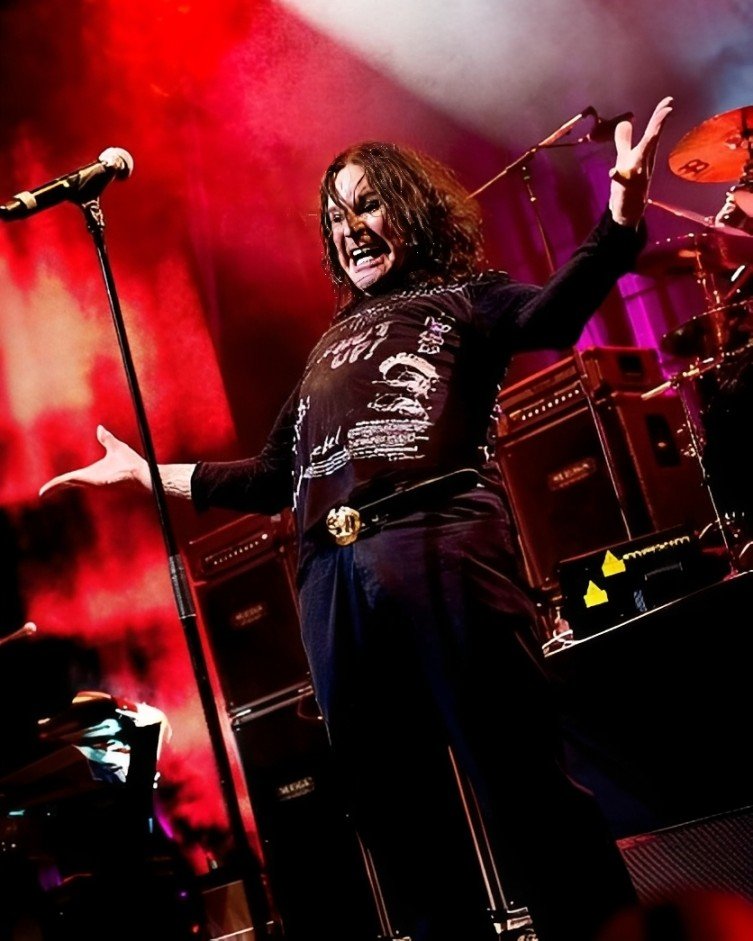
Ozzy Osbourne doesn’t just perform — he inhabits the stage.
When the lights drop and that unmistakable presence emerges, time bends. Decades of rock history collide in a single moment, and the crowd knows they’re witnessing something that can’t be replicated or rehearsed.
There is a reason the name Prince of Darkness still carries weight. Ozzy’s live energy isn’t about technical perfection or polished theatrics. It’s raw, instinctive, and unapologetically human. Every gesture, every stare into the crowd feels earned — shaped by years of excess, survival, loss, and relentless reinvention.
What makes Ozzy extraordinary on stage is not just the music, but the connection. He doesn’t dominate the audience — he pulls them in. Thousands of voices become one. Hands rise. The boundary between performer and crowd disappears. It’s chaos, but it’s shared chaos — the kind only true rock icons can create.
His voice, worn yet powerful, carries history. You hear youth, rebellion, pain, humour, and defiance all at once. It’s not about hitting every note perfectly — it’s about meaning. And Ozzy delivers meaning in every second he stands under those lights.
Behind the spectacle is resilience. Few artists have faced the physical and personal challenges Ozzy has endured and still returned to the stage with this level of intensity. Each performance feels like a statement: I’m still here. Not out of nostalgia, but out of purpose.
For longtime fans, it’s emotional. For first-timers, it’s transformative. Watching Ozzy live isn’t just a concert — it’s a reminder of what rock music was always meant to be: loud, imperfect, honest, and alive.
Legends don’t fade quietly.
They burn — and Ozzy Osbourne still burns bright.