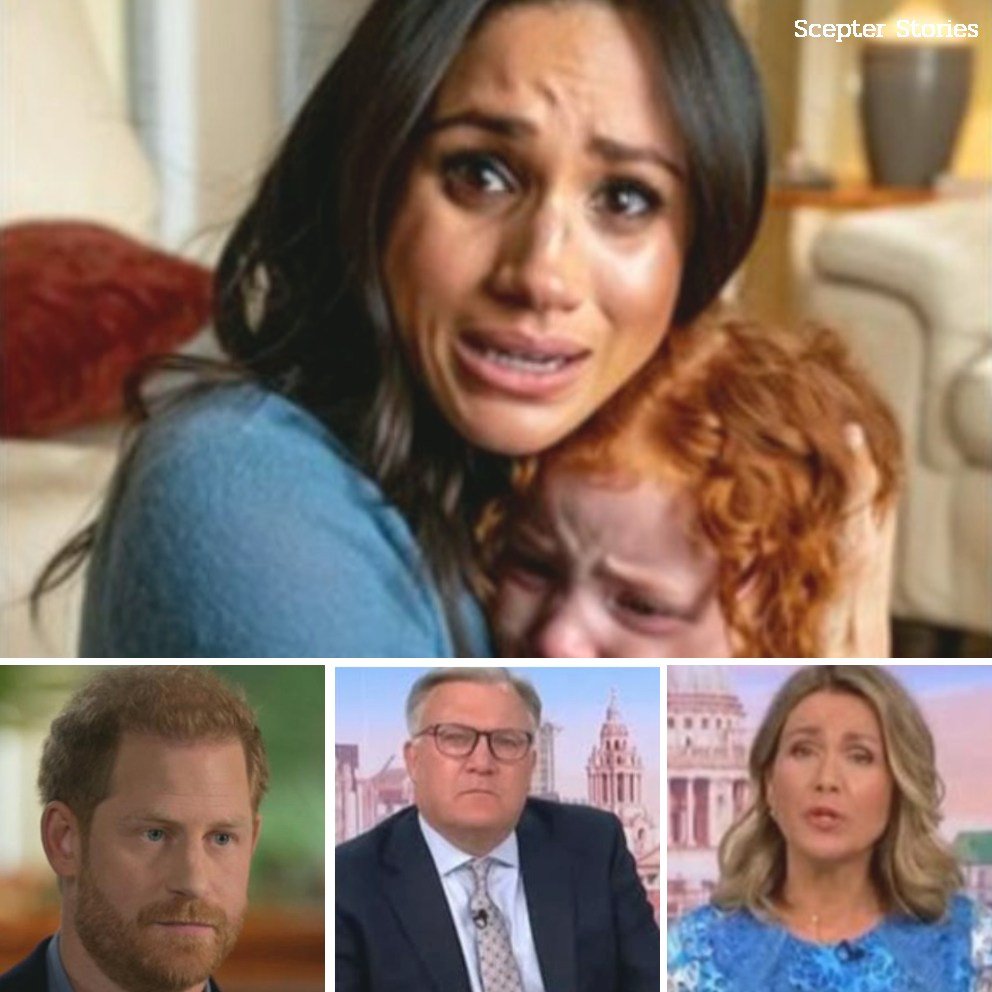
“30 minutes ago” headlines spread rapidly online today after claims surfaced that a Good Morning Britain segment had been halted to deliver devastating news about Prince Harry in the United States. Social posts went further, alleging an emotional scene involving Meghan Markle, said to be in tears while holding their daughter.
Here’s the crucial context: there is no confirmed broadcast clip, official statement, or verified report from Good Morning Britain, the Sussexes’ representatives, or U.S. authorities supporting these claims at this time.
What is happening is a familiar pattern in the modern royal-news ecosystem. A dramatic headline appears. Fragments of alleged dialogue circulate. Screenshots are shared without source attribution. And within minutes, speculation outruns verification.
Royal commentators stress that Good Morning Britain has not issued any public notice of an emergency interruption related to Prince Harry. Likewise, no credible news outlet has confirmed an incident involving Meghan Markle in the U.S. matching the descriptions circulating online. In the absence of primary sources — a broadcast segment, a producer confirmation, or a statement from the couple — the story remains unsubstantiated.
Why, then, the shock? Because the language is designed to trigger it. Phrases like “minutes ago,” “stops the show,” and emotionally charged quotes spread quickly — especially when paired with high-profile names. The effect is powerful, but power does not equal proof.
For readers and viewers, the responsible approach is patience. Major developments involving public figures of this stature are typically confirmed swiftly by multiple outlets. Until that happens, these claims should be treated as rumour, not news.
We will update if and when verified information emerges from recognised broadcasters or official representatives.