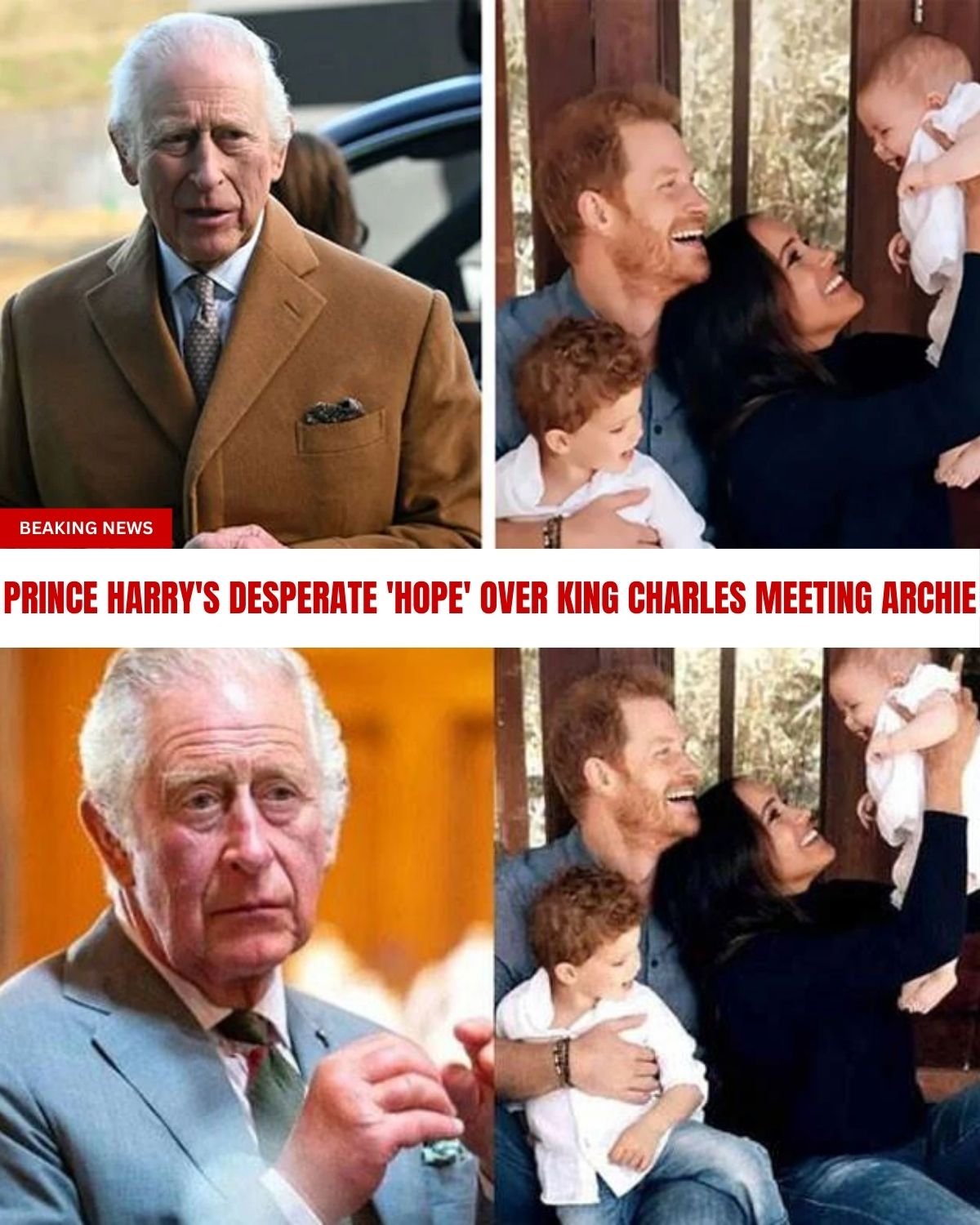
For all the headlines, interviews, books, and courtroom battles, the heart of this story is quieter — and far more human. At its core, it is about a father who still hopes his children might one day know their grandfather, and a King who appears to have chosen distance over reconciliation.
Prince Harry has not hidden his desire. Despite years of public rupture with the Royal Family, he has repeatedly expressed that he wants King Charles to meet Archie and Lilibet — not as symbols of controversy, but simply as grandchildren. That hope, however, now seems to be colliding with a wall of institutional finality.
The security line that changed everything
The most decisive moment may not have come from a palace balcony or a family gathering — but from a courtroom. Recent UK rulings have made it clear that Harry no longer qualifies for the automatic police protection he once had as a senior working royal. No exceptions. No special category. No “just this once.”
For Harry, the implication is stark: without guaranteed security, bringing his children to the UK becomes a risk he says he cannot responsibly take. From his perspective, it is not about privilege — it is about safety. From the state’s perspective, it is about precedent and policy.
The result? A stalemate where neither side moves — and the children remain oceans away.
Silence as a message
What stands out most is not what the Palace has said, but what it hasn’t.
There has been no public appeal, no visible compromise, no indication that extraordinary steps will be taken to bridge the gap. King Charles III, now firmly in his role as monarch, appears to be drawing a clear boundary between family and crown — and choosing the latter.
To many observers, the silence feels intentional. Not cold, but resolute. A signal that actions have consequences, and that reconciliation cannot come on the terms set by public pressure or media narratives.
The weight of past words
It is impossible to separate this moment from what came before.
The interviews.
The documentaries.
The memoir.
Each accusation, whether justified or disputed, added another layer of strain. From the Palace’s point of view, trust was eroded publicly and repeatedly. From Harry’s point of view, silence and inaction left him no other choice.
Now, those years of mutual grievance seem to have crystallised into something more permanent — not anger, but distance.
Caught in between: Archie and Lilibet
The quiet tragedy in all of this is that Archie Mountbatten-Windsor and Lilibet Mountbatten-Windsor are too young to understand the forces shaping their lives.
They are not decision-makers.
They did not give interviews.
They did not choose sides.
Yet they are growing up with a grandfather they know mostly by title and photograph — not by presence.
A door not slammed, but closed
This does not feel like a dramatic banishment or a royal edict. It feels more final than that.
No visits.
No protection.
No special exceptions.
Just a system doing exactly what it says it does — and a family forced to live with the outcome.
Whether reconciliation will ever come is an open question. But if it does, it may require something far rarer than apologies or public statements.
It may require silence — from both sides — long enough for trust to rebuild out of the spotlight.
Until then, a father’s hope remains unanswered.
And the Palace, at least for now, looks firmly the other way.