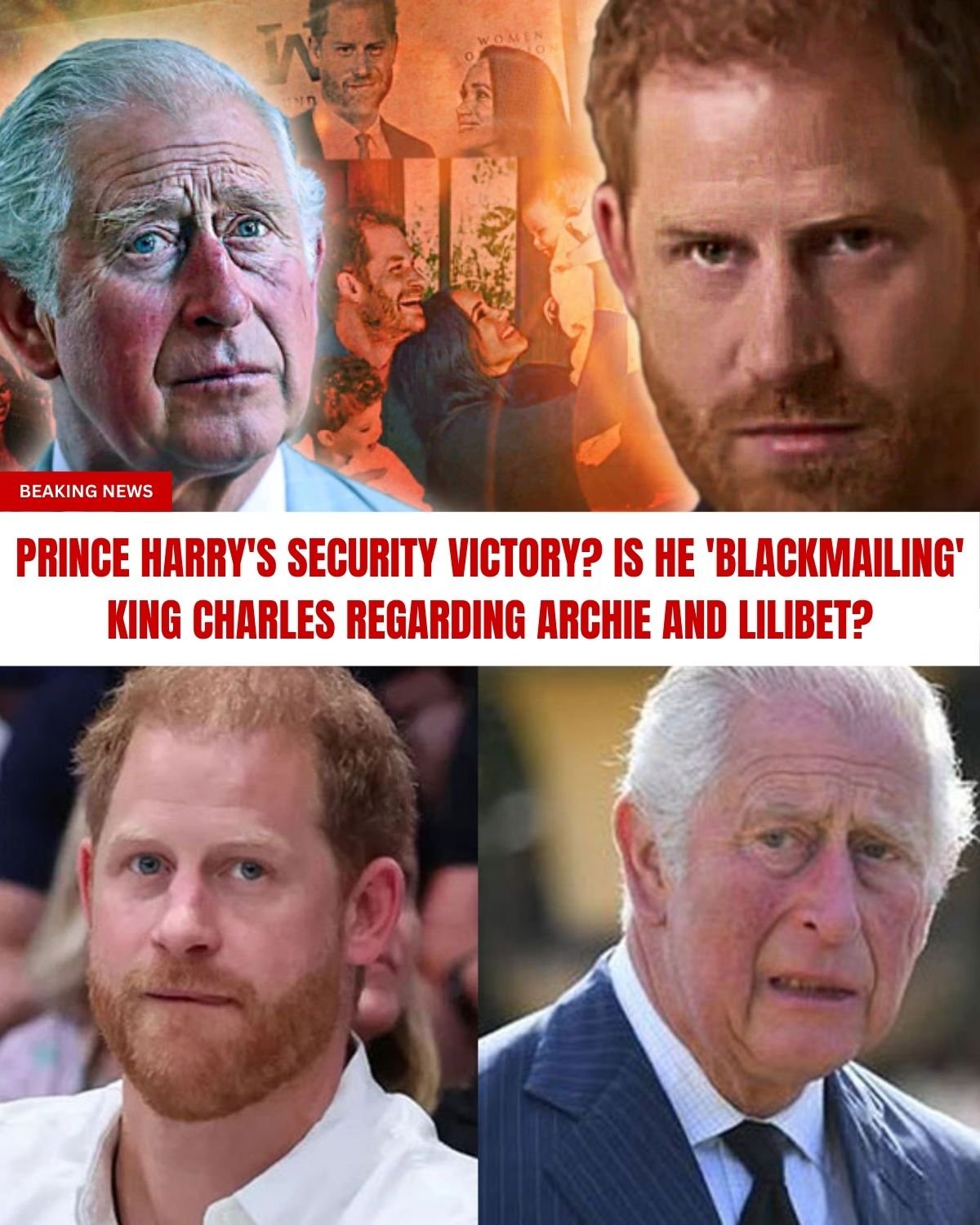
Prince Harry’s battle for taxpayer-funded armed security in the UK intensifies, sparking controversy amid claims he is emotionally blackmailing King Charles to secure protection. The Duke reportedly threatens to withhold his children, Archie and Lilibet, from the royal family if demands are unmet, escalating tensions as the security decision looms imminently.
The controversy centers on Harry’s insistence on maintaining an armed security detail despite being a non-working royal residing mostly in the United States. Sources close to the duke signal confidence a decision granting the protection will soon be announced by the government committee Ravik, responsible for royal security assessments. Yet opposition remains fierce, questioning the necessity and fairness of taxpayer-funded protection for Harry.
Critics argue while Harry cites credible threats, including a stalker incident thwarted by his own bodyguards, these risks do not merit extensive armed detail funded by the UK public. Veteran royal correspondents stress Harry has proven unable to justify this demand given his infrequent presence in Britain and his personal security arrangements already in place during visits.
Additionally, speculation mounts around accusations that Harry is leveraging his grandparental relationship to secure his security wishes. Some insiders believe he is emotionally blackmailing the royal household, hinting that if armed protection is denied, his children will not visit their grandfather, King Charles. This theory fuels further debate on royal family dynamics and public perception.
Experts clarify that the royal household and the monarch cannot directly block or influence Ravik’s decisions, despite claims otherwise from the Sussex camp. Ravik operates independently within the Home Office, with royal advisers present only to observe, not control. This diminishes the credibility of assertions that the king or royal advisors are interfering with security rulings.
The security dispute comes amid other tensions involving the Sussexes, including Meghan Markle’s reportedly thriving jam business, and repeated staff turnover within their communications team. These elements combine to paint a portrait of a family publicly struggling with internal cohesion, business ventures, and their roles within and outside the monarchy.
Meanwhile, family members like Princess Beatrice and Eugenie are seen stepping cautiously back into royal engagements, showing allegiance to the king amid a backdrop of balancing family loyalties with the Sussexes’ fraught public stance. Their attendance at recent royal gatherings suggests attempts to maintain unity as the royal household navigates ongoing challenges.
The forthcoming decision on Harry’s security is set against high-stakes royal occasions, including the centenary celebrations for Queen Elizabeth II and a potential King Charles state visit to the United States. These events may offer rare opportunities for the king and his grandchildren to reunite—should security arrangements and family dynamics permit.
Royal observers emphasize that armed security decisions are complex, involving careful assessment of real threats versus public cost and precedent. The Sussexes’ situation remains unique, given their semi-detached status from official royal duties and geographical distance, complicating customary security protocols and sparking intense public scrutiny.
As the UK waits for Ravik’s ruling, the saga spotlights deeper issues of trust, loyalty, and the interplay between personal security and royal tradition. The accusations of blackmail and the strategic use of family access exacerbate an already volatile environment, putting King Charles and the royal household under unprecedented pressure.
The debate also draws focus to the contrasting roles within the royal family, with King Charles reported to have led the royal engagements tally in 2023, surpassing Princess Anne’s longstanding record, while the Princess of Wales balances public duties with health and family commitments, illustrating the diverse demands on modern royals.
This fractious episode marks a critical juncture for the monarchy, framing questions about security, family unity, and the evolving public image of its most controversial members. With decisions pending and public interest at a peak, the implications for royal protocol and the Sussexes’ future engagement with the UK remain intensely unsettled.