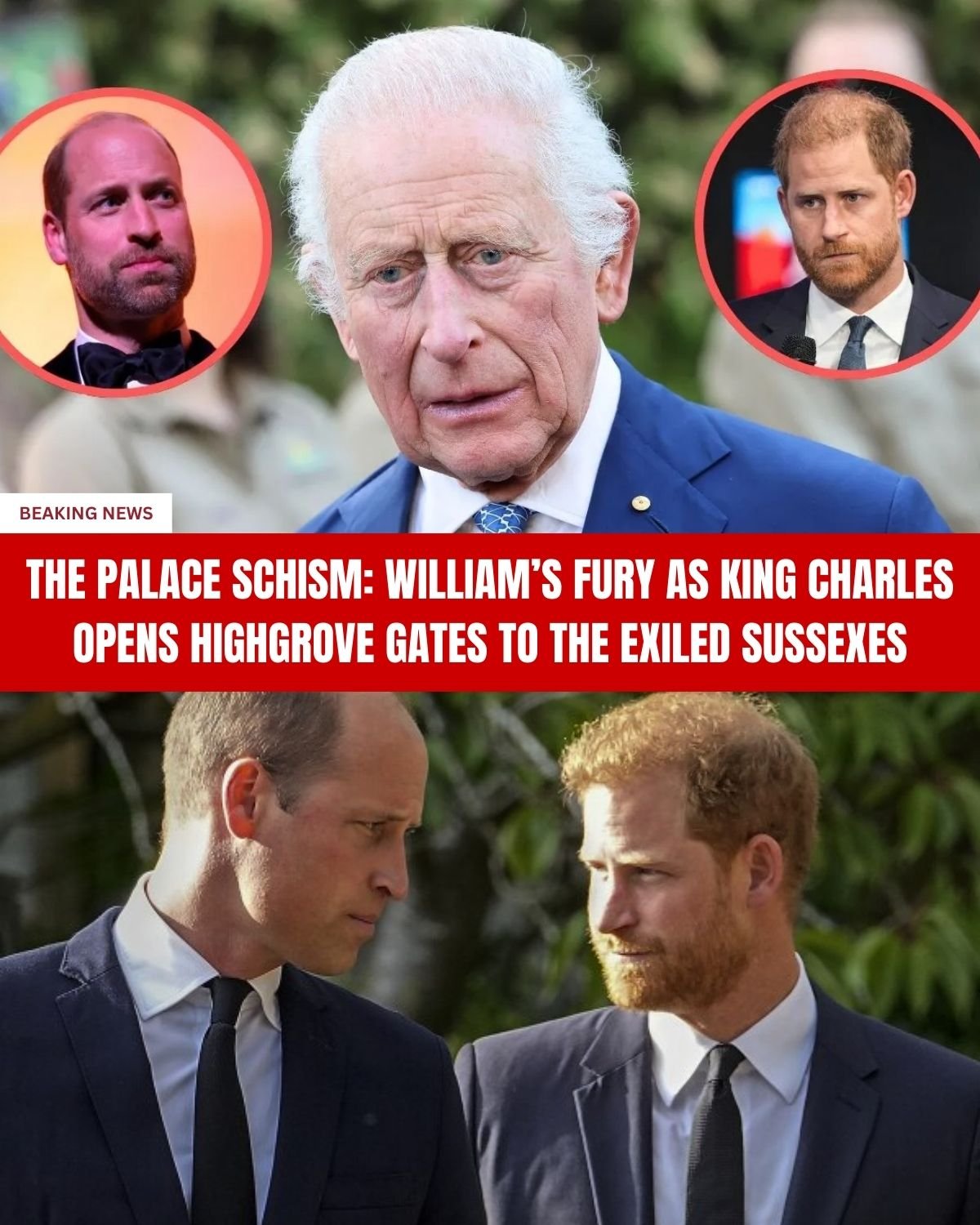
The pristine hedges and manicured lawns of Highgrove House, the private sanctuary of King Charles III, have long been a symbol of royal stability and horticultural peace. However, behind the limestone walls of the Gloucestershire estate, a storm is brewing that threatens to tear the very fabric of the House of Windsor apart. At the center of this burgeoning constitutional crisis is not just the self-exiled Duke and Duchess of Sussex, but a fundamental, bitter disagreement between a father seeking atonement and a son demanding accountability.
According to high-level palace insiders and sources close to the Prince of Wales, a “seismic shift” in the internal power dynamics has occurred. As King Charles III continues his reign with a focus on legacy and family reconciliation, his eldest son and heir, Prince William, has reportedly adopted a “scorched earth” policy regarding his younger brother. The catalyst for this latest explosion of tension? An alleged “olive branch” extended by the Monarch that has left the Prince of Wales feeling undermined, blindsided, and deeply betrayed.
The Highgrove Invitation: A Father’s Hope or a King’s Folly?
The controversy erupted following reports that King Charles III has privately expressed a desire to host Prince Harry and Meghan Markle at Highgrove during their projected visit to the United Kingdom in 2026. For the King, Highgrove is more than just a home; it is his soul’s retreat. Offering it as a base for the Sussexes is seen by royal historians as the ultimate gesture of peace—a way to bring Harry back into the fold without the clinical coldness of a hotel room or the public scrutiny of a central London residence.
However, for Prince William, this invitation is nothing short of a strategic catastrophe. Sources within Kensington Palace suggest that the Prince of Wales views any concession to the Sussexes as a validation of their “war of words” against the institution. To William, the gates of Highgrove should remain firmly bolted against those who, in his view, spent years profiting from the betrayal of family secrets on global streaming platforms.
“The Prince of Wales is not just angry; he is resolute,” claims a source who has worked closely with the heir for over a decade. “He sees the King’s leniency as a direct threat to the future of the Monarchy. William believes that by rewarding Harry’s behavior with such a prestigious invitation, the King is sending a message of weakness to the public and the Commonwealth.”
The “Iron Curtain” of Kensington Palace
While the King operates from a place of parental longing, William is playing a much longer game. As the future King, he is hyper-aware of the optics of the Monarchy. The Prince of Wales has reportedly established an “iron curtain” around his own household, ensuring that neither he, Catherine, nor their children have any contact with the California-based couple.
The rift has moved beyond mere sibling rivalry. It is now a clash of ideologies. William’s strategy is one of total isolation. He believes that for the Monarchy to survive, it must be seen as a dignified, unified front, free from the “circus” that follows the Sussexes. By allowing Harry and Meghan back onto Royal soil—especially at a location as intimate as Highgrove—the King is effectively inviting the circus back into the tent, much to William’s chagrin.
The tension reached a breaking point during a recent private summit at Sandringham, where the Prince of Wales is said to have confronted his father. The exchange was described by staff as “unusually heated,” with William reminding the King that the Sussexes’ recent withdrawal from high-profile charities and their shifting professional landscape only proves their instability.
The Charity Vacuum: A Symbol of Declining Influence
The recent news that Prince Harry and Meghan Markle have stepped back from yet another significant charitable partnership has only added fuel to the fire. For William, this is the “smoking gun” that proves the Sussexes are no longer assets to the British public or the Crown.
The Prince of Wales has reportedly used these charity exits as leverage in his arguments with the King. His logic is simple: why should the Crown provide a royal sanctuary to individuals who are systematically dismantling their own philanthropic legacy? William is said to be pushing for a formal “disassociation” policy, one that would officially bar the Sussexes from using royal estates as backdrops for their media ventures.
A Dynasty Divided
The psychological toll on the family cannot be understated. While King Charles III deals with the weight of his crown and his health, he finds himself 𝒄𝒂𝓊𝓰𝒉𝓉 between the role of a loving father and a reigning Sovereign. He wants his sons to reconcile before it is too late.