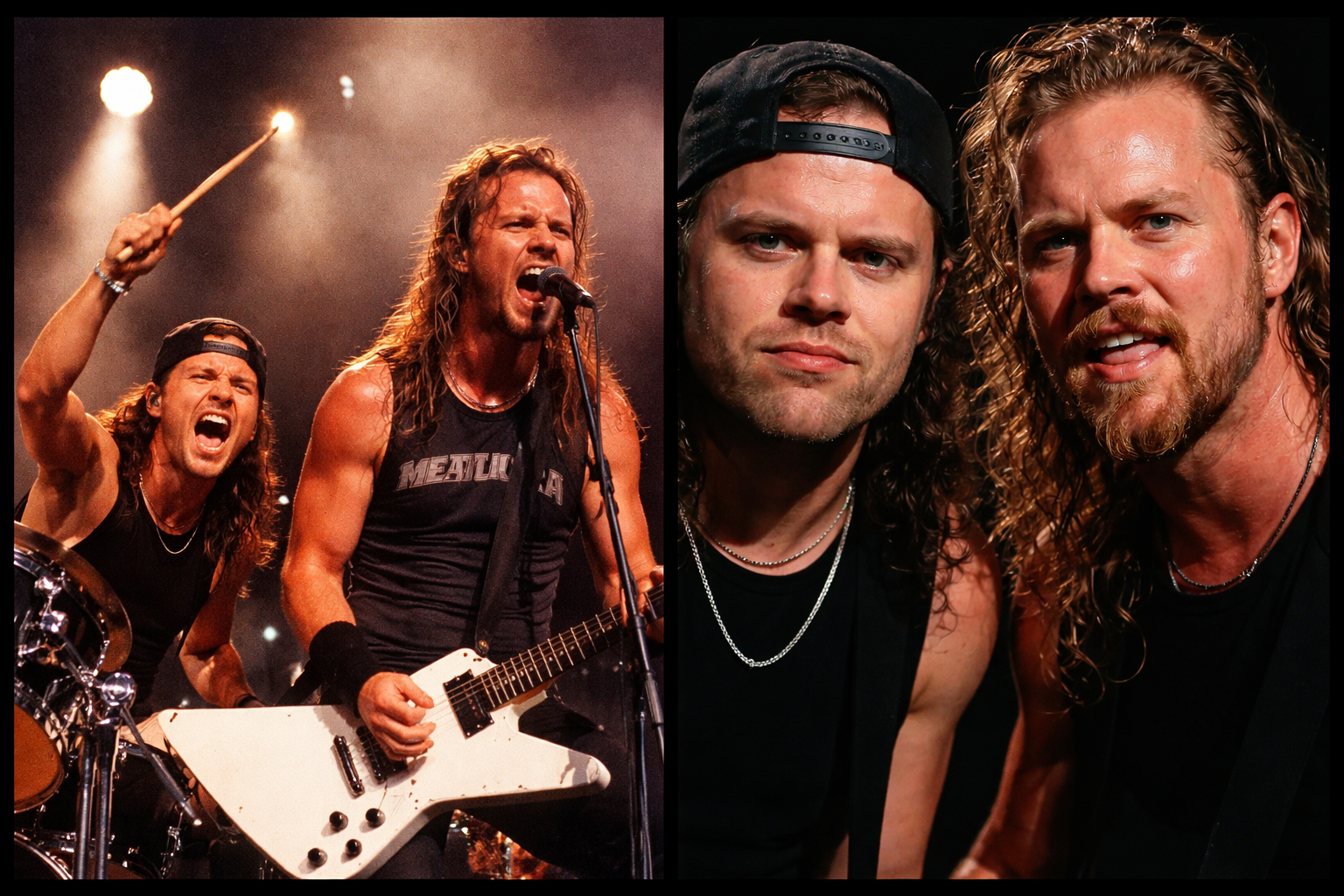
By 1991, heavy metal was no longer fighting for space—it had taken over. And at the center of that takeover stood Lars Ulrich and James Hetfield, the driving forces behind Metallica at the exact moment the band reshaped the future of rock music.
That year marked a turning point not just for the band, but for metal itself.
1991: The Year Metallica Took Control
With the release of Metallica (commonly known as The Black Album), the band crossed a line few metal acts had ever reached. Thrash roots met massive hooks, precision met power, and underground credibility collided with global success. Metallica went from headlining arenas to dominating stadiums—and they did it without abandoning heaviness.
Lars Ulrich and James Hetfield stood at the heart of that shift.
Two Leaders, Two Roles
James Hetfield embodied the physical weight of Metallica’s sound. His rhythm guitar defined the band’s identity—tight, percussive, and relentless. By 1991, his vocals had evolved into something deeper and more commanding, turning raw aggression into authority. Onstage, he didn’t chase attention—he held it.
Lars Ulrich, meanwhile, was the engine behind the momentum. Beyond the drum kit, he was deeply involved in shaping the band’s direction, pushing for bigger ideas, sharper production, and global reach. His energy and ambition helped drive Metallica from metal heroes to cultural heavyweights.
Together, they weren’t just bandmates—they were the axis around which Metallica moved.
Confidence Earned, Not Given
Photos from this era show a band fully aware of its position—but not detached from its roots. Lars and James carried themselves with confidence built from years of grinding tours, lineup changes, criticism, and near-misses. Nothing about 1991 came easily.
Metallica had earned their place through discipline, confrontation, and refusal to compromise when it mattered most.
Metal at the Top
The early ’90s were a volatile time for heavy music. Grunge was rising, trends were shifting, and many believed metal’s dominance was ending. Metallica proved otherwise—not by chasing trends, but by expanding what metal could be without losing its backbone.
The success of 1991 didn’t dilute the genre. It strengthened it.
Why This Moment Still Matters
That year remains a benchmark. Not just for Metallica fans, but for anyone who believes heavy music can be both uncompromising and universal. Lars Ulrich and James Hetfield in 1991 represent a rare moment when preparation met opportunity—and metal stood unchallenged at the top of the world.
They weren’t posing for history.
They were standing in it.
And decades later, that moment still defines what it means for metal to truly rule. 🤘🔥