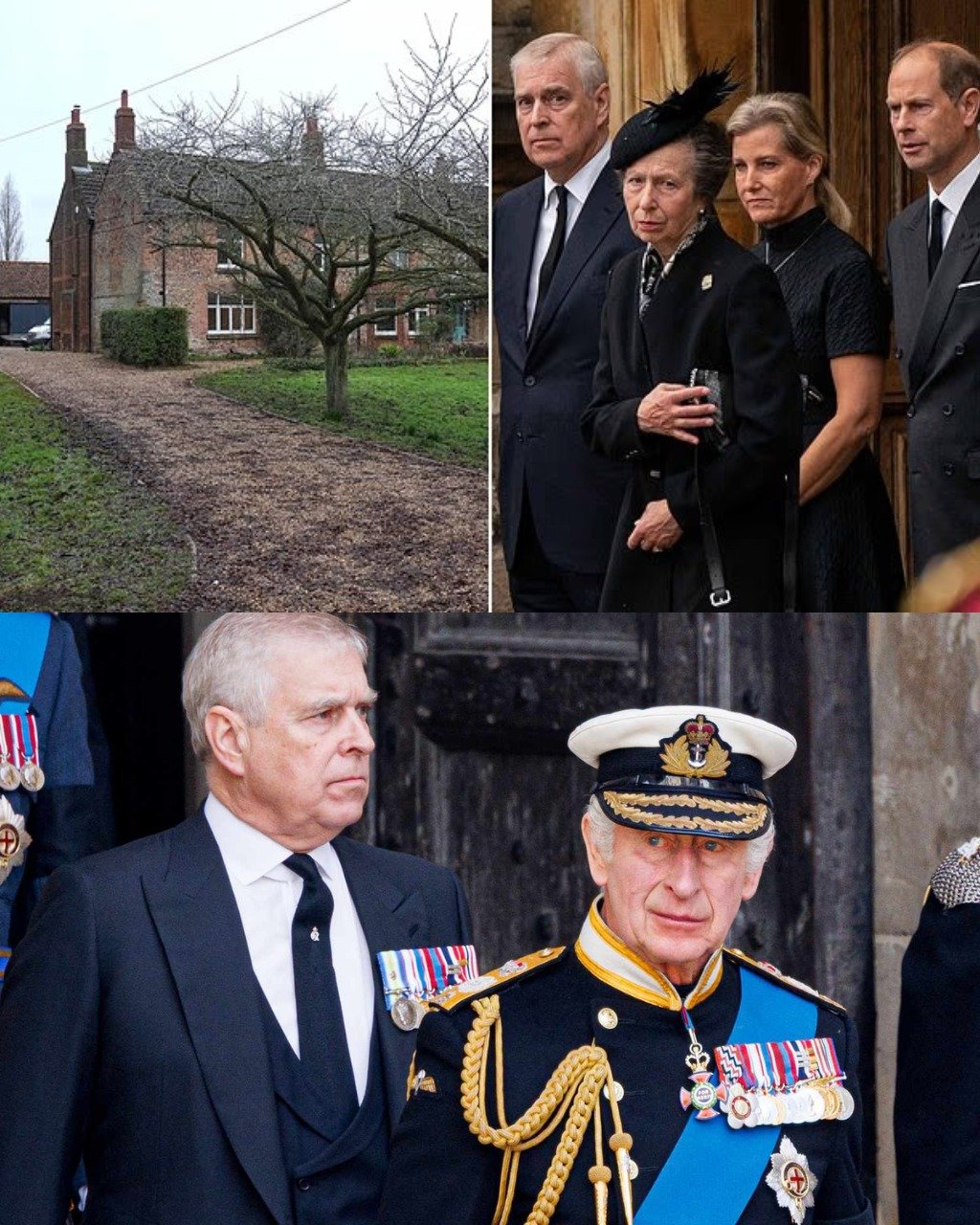
In a dramatic reversal befitting one of the British monarchy’s most controversial episodes, Prince Andrew has reportedly begun a new chapter of life removed from the public eye and the heart of royal duties. Once a prominent senior member of the Royal Family, the Duke of York has spent the past several years navigating the fallout from his association with convicted sex offender Jeffrey Epstein — a scandal that ultimately saw him stripped of military titles and official duties by King Charles III.
According to insiders, Andrew’s current residence does not resemble the grandeur of his previous surroundings at Buckingham Palace or his former royal estates. Instead, the former royal — once a fixture at state occasions and ceremonial events — is said to be living in a more secluded and modest home, carefully chosen for privacy as his role within the institution has diminished.
The transition from palace life to relative obscurity underscores a stark personal and public realignment. Andrew’s diminishing presence at official functions and family engagements has been marked by the absence of formal roles, less frequent appearances connected to charitable organizations, and a general retreat from the ceremonial responsibilities he once held. The shift has drawn attention from royal watchers and critics alike, who view it as a visible consequence of the reputational damage incurred by the Epstein scandal.
While the Palace has not publicly detailed the specifics of Andrew’s living arrangements, sources close to the situation describe his new residence as intentionally low-profile, with security limited compared to previous postings. The move is framed as both a practical adjustment and a symbolic distancing from the highest tiers of royal life.
As questions persist about the long-term implications for Andrew’s place within the family — and whether he will ever reclaim any form of official standing — his current lifestyle stands as an unvarnished marker of how far a senior royal’s fortunes can shift when entangled in controversy. Observers note that the Duke’s quiet existence starkly contrasts with the privileged visibility once afforded to him, raising broader conversations about accountability, legacy, and the shifting boundaries of royal relevance in the modern era.