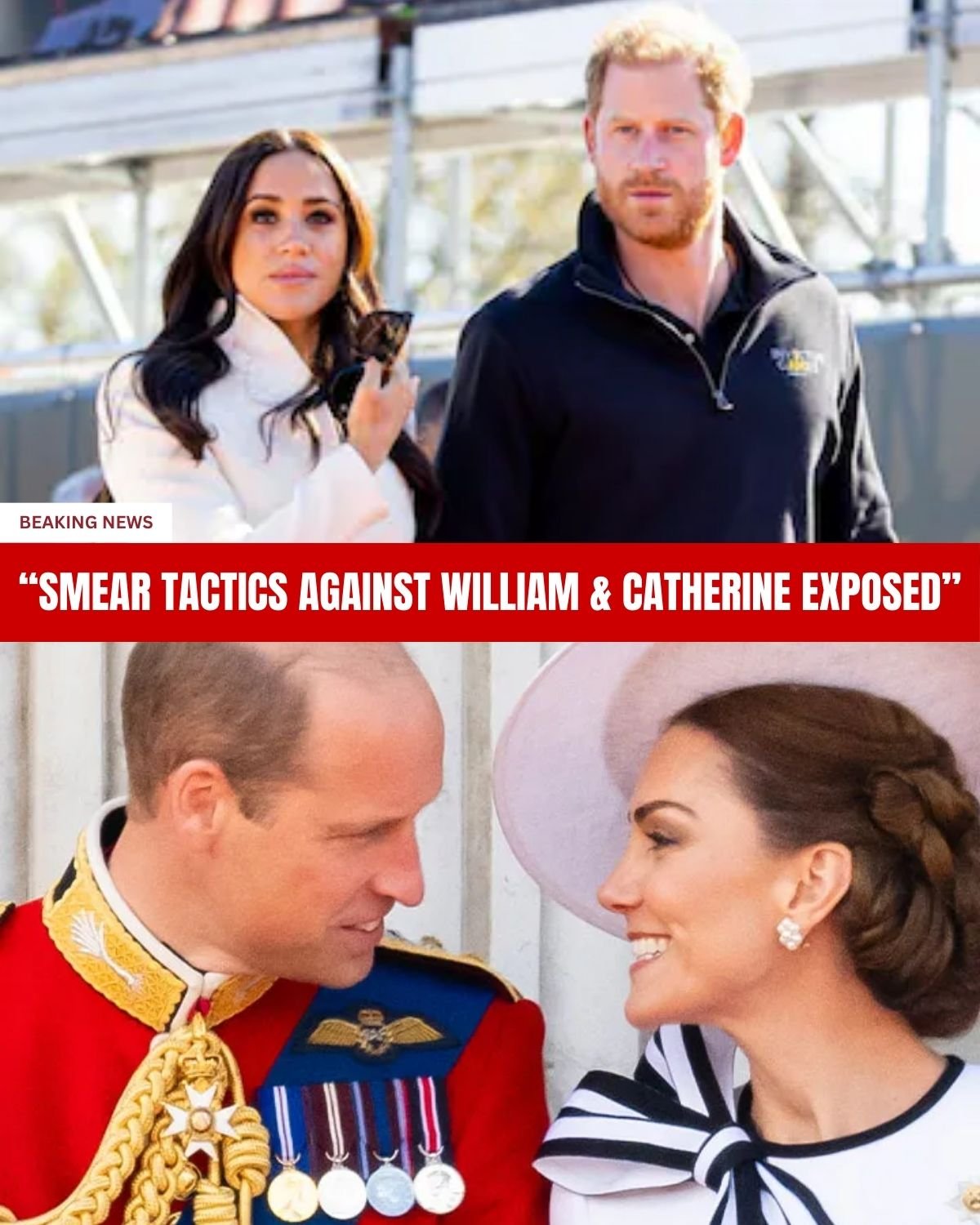
In recent weeks, renewed attention has fallen on the already fragile relationship between the Duke and Duchess of Sussex and the senior members of the British royal family. A wave of commentary, insider claims, and media analysis has reignited debate around whether a coordinated narrative battle is unfolding behind the scenes – one that some observers describe as a calculated attempt to reshape public perception at the expense of the future King and Queen.
At the centre of the controversy are Meghan Markle and Prince Harry, whose post-royal life has been marked by high-profile interviews, documentaries, memoirs, and ongoing legal disputes with the press. Critics argue that these repeated public disclosures have created sustained pressure on the monarchy, while supporters view them as necessary acts of self-defence against an entrenched institution.
However, royal commentators now suggest that the focus has shifted more directly toward Prince William and Catherine. According to multiple media analysts, recent headlines and opinion pieces appear to frame the Prince and Princess of Wales as symbols of an outdated system, implicitly positioning them in contrast to the Sussexes’ narrative of independence and reform.
While no concrete evidence has been publicly confirmed of an organised “smear campaign,” the perception of coordinated messaging is what has raised alarm within palace circles. Sources close to Kensington Palace claim that senior aides have been forced into a defensive posture, monitoring press cycles closely and engaging crisis communications specialists to counteract what they view as destabilising media dynamics.
This moment comes at a particularly sensitive time. The monarchy is navigating generational transition, public trust challenges, and heightened scrutiny over relevance in a modern Britain. Any sustained reputational damage to the Prince and Princess of Wales has long-term implications, not just personally, but institutionally. As the heirs apparent, their credibility underpins the monarchy’s future stability.
From a media strategy perspective, experts note a clear asymmetry. The Sussexes operate within the commercial media ecosystem – podcasts, streaming platforms, global publishing deals – while the royal household remains bound by tradition, restraint, and limited public rebuttal. This imbalance makes even unverified claims difficult to neutralise once they gain traction online.
Supporters of Harry and Meghan reject the idea of malicious intent, arguing that their disclosures stem from unresolved grievances and trauma rather than strategic aggression. They point out that silence from the Palace has historically allowed damaging narratives to flourish unchecked, and that speaking out was the only way to reclaim agency.
Still, within royal-adjacent circles, concern is growing that repeated public airing of internal conflicts risks eroding the monarchy’s core strength: unity, dignity, and continuity. What was once a private family rift has evolved into a global media spectacle with political, cultural, and economic consequences.
Whether these developments represent deliberate orchestration or the unintended fallout of unresolved family conflict remains open to interpretation. What is clear is that the British royal family is no longer just managing tradition – it is navigating an era of relentless narrative warfare, where perception often matters more than proof.
And as the lines between personal grievance, media influence, and institutional survival continue to blur, the world watches closely to see which version of the story ultimately prevails.