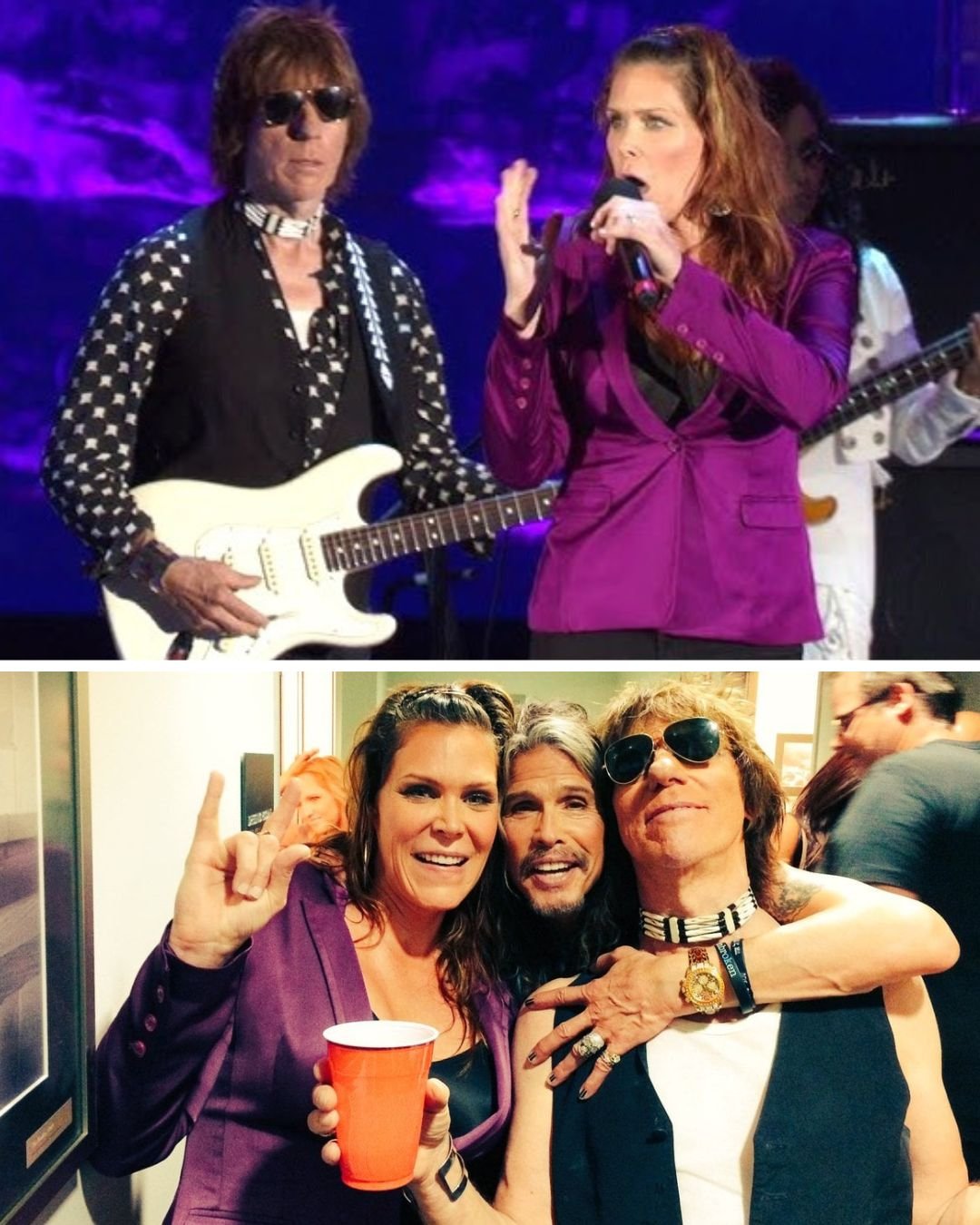
Some performances don’t entertain — they confess.
That’s exactly what happened when Jeff Beck and Beth Hart stepped onto the stage in Amsterdam to perform I’d Rather Go Blind.
From the first note, it was clear this wouldn’t be a typical blues cover. The tempo slowed, the air thickened, and the room leaned in.
Beth Hart: Singing From the Edge
Beth Hart didn’t perform the song — she lived inside it.
Her voice arrived raw and unguarded, carrying pain, vulnerability, and strength in equal measure. Each lyric felt personal, almost exposed, as if she were reliving the story rather than retelling it.
There was no over-singing, no theatrics. Just a voice trembling with truth — sometimes breaking, sometimes roaring — always honest. You could feel the heartbreak in the silences between the words as much as in the words themselves.
Jeff Beck: A Guitar That Speaks
Then there was Jeff Beck — restrained, elegant, devastatingly precise.
His guitar didn’t compete with the vocal. It answered it.
Each phrase he played felt like a response, a thought left unsaid, a second voice echoing Beth’s emotion. Beck’s tone was fragile yet piercing, bending notes just enough to sound human — aching, breathing, vulnerable.
Rather than filling space, he created it. Every pause mattered. Every note lingered.
Letting the Song Breathe
Together, they stretched time.
By slowing the song down, Beck and Hart allowed every emotion to surface fully — heartbreak, longing, resignation, love. Nothing was rushed. Nothing was hidden.
The result was intimacy on a concert-hall scale.
Audience members stood motionless, many visibly emotional. No phones in the air. No chatter. Just complete stillness — the kind that only happens when everyone knows they’re witnessing something rare.
Not a Cover — a Conversation
Originally made iconic by Etta James, I’d Rather Go Blind is one of the most emotionally loaded songs in blues history. Covering it risks comparison. Transforming it requires courage.
Beck and Hart didn’t imitate.
They interpreted.
They honoured the song’s soul while filtering it through their own scars, their own histories, their own voices. What emerged wasn’t nostalgia — it was something immediate and alive.
A Moment That Stays With You
When the final note faded, the silence said everything. Applause came later — almost reluctantly — as if the room needed a moment to return to itself.
This performance wasn’t about perfection.
It was about truth.
And that’s why it lingers — not just as a great blues moment, but as a reminder of what happens when two artists trust the music enough to let it speak for itself.