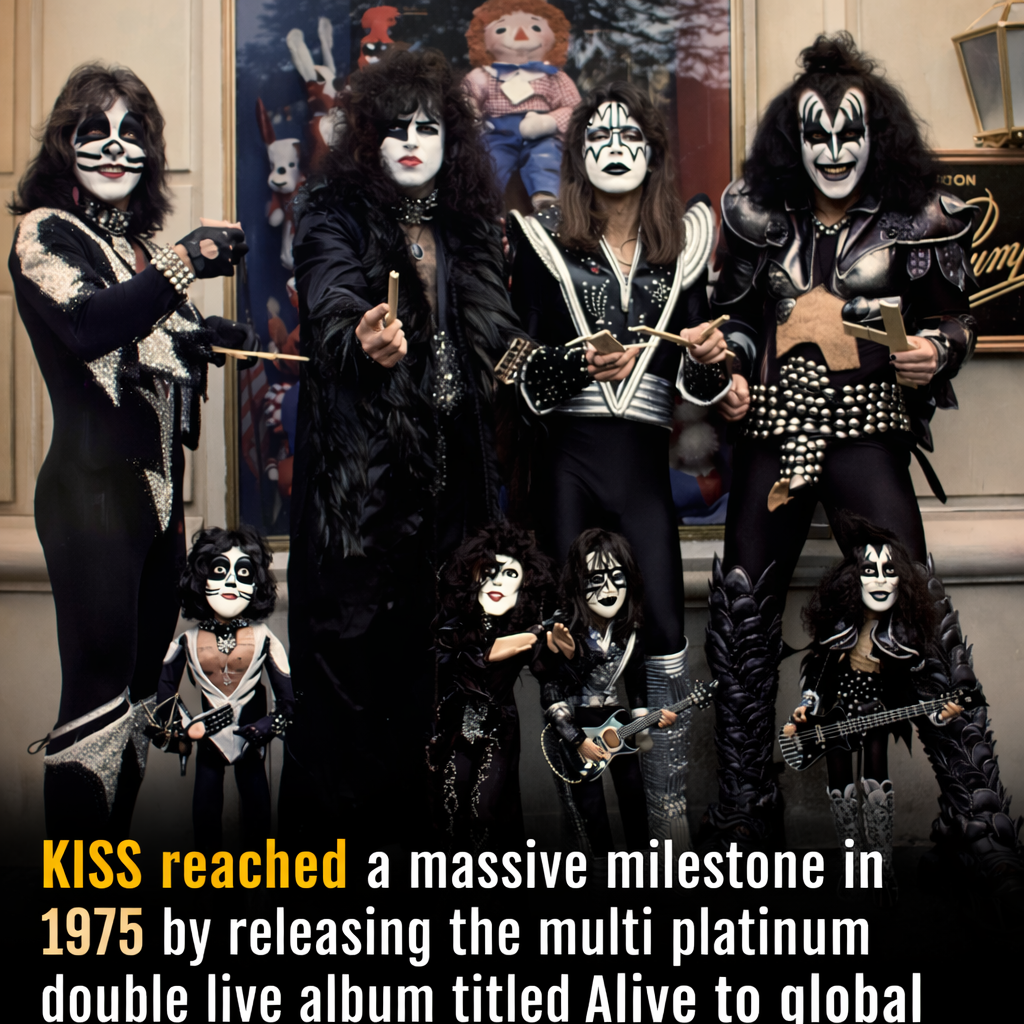
In the mid-1970s, KISS were on the brink of collapse. Studio albums weren’t selling, touring costs were piling up, and the band was sinking into serious debt. By industry standards, they were close to becoming another loud, short-lived rock experiment that never quite worked. What saved them wasn’t a polished studio release — it was a gamble on the one thing they knew was undeniable: their live show.
That gamble became Alive! (1975), a double live album that captured KISS exactly as fans experienced them — raw, loud, theatrical, and unapologetically over the top. The record wasn’t just a concert recording; it was a statement. Exploding guitars, crowd noise, extended solos, and an atmosphere that felt larger than life. It finally translated the band’s onstage power into something people could take home.
The result was immediate and dramatic. Alive! went multi-platinum and wiped out the band’s debt almost overnight. More importantly, it unlocked momentum. Suddenly, KISS weren’t just a rock band — they were an experience people wanted to be part of. The makeup, the personas, the theatrics — everything clicked at once for a global audience hungry for something bigger than sound alone.
What followed was unprecedented at the time. Each of the four original members became a character, not just a musician. That visual identity turned KISS into a brand before branding was a standard playbook in music. Merchandising exploded — toys, comic books, lunchboxes, posters — and the band leaned into it without apology. Critics scoffed. Fans didn’t care. Stadiums filled. The KISS Army was born.
Their live shows became legendary spectacles: fire-breathing, blood-spitting, smoke cannons, pyrotechnics, and even levitating drum kits. But underneath the excess was discipline. The band treated every show like a production, every tour like a business operation, and every release like a reinforcement of their identity. While musical trends shifted through the late seventies and eighties, KISS stayed recognisably KISS.
Over time, the numbers told the story. More than 100 million records sold worldwide. Decades of global tours. Generations of fans. A permanent place in the Rock & Roll Hall of Fame. Few bands managed to survive cultural change — even fewer turned themselves into a global corporation without losing their core audience.
The legacy of KISS isn’t just about music. It’s about understanding that entertainment is emotional, visual, communal, and repeatable. They proved that rock and roll could be both art and enterprise — loud, theatrical, and commercially fearless at the same time.
What Alive! really did in 1975 wasn’t just save a band.
It rewrote the rules for what a rock band could become.