In the ever-scrutinized world of the British monarchy, even a glance can ignite a firestorm. This week, social media erupted after resurfaced footage appeared to show Meghan Markle locking eyes with Prince William in what online commentators are calling a “telling” and “unmistakable” moment. The clip, pulled from past royal engagements, has been dissected frame by frame across TikTok, Instagram, and X, with critics claiming the Duchess of Sussex displayed an intensity she has “never once” shown toward her husband, Prince Harry.

The footage itself is brief. During a public appearance involving the so-called “Fab Four,” Meghan appears to glance toward William with what some describe as anticipation or admiration. William, for his part, looks away quickly, adjusting his scarf and redirecting his attention elsewhere. To many viewers, the exchange lasted seconds. To the internet, it lasted long enough to fuel a thousand theories. “That wasn’t a casual look,” one viral commentator insisted. “That was the look of someone seeing what she really wanted.” Another added bluntly, “She married the spare, but she’s staring at the heir.”:max_bytes(150000):strip_icc():focal(950x350:952x352)/PEOPLENewsletterMeghanMarklePrinceHarryPrinceWilliamKateMiddleton020624-70dc6573a54a4cf6973ff8bf8ebc0fb2.jpg)
The narrative that Meghan may have harbored a fascination with the future king is not new. From the early days of her relationship with Harry, reports suggested that William had advised caution. In his memoir Spare, Harry recounts tensions with his older brother, including disagreements over the speed and seriousness of the romance. Royal biographer Robert Jobson has previously noted that William’s concerns were framed as protective rather than hostile. Still, hindsight has transformed those warnings into ammunition for speculation.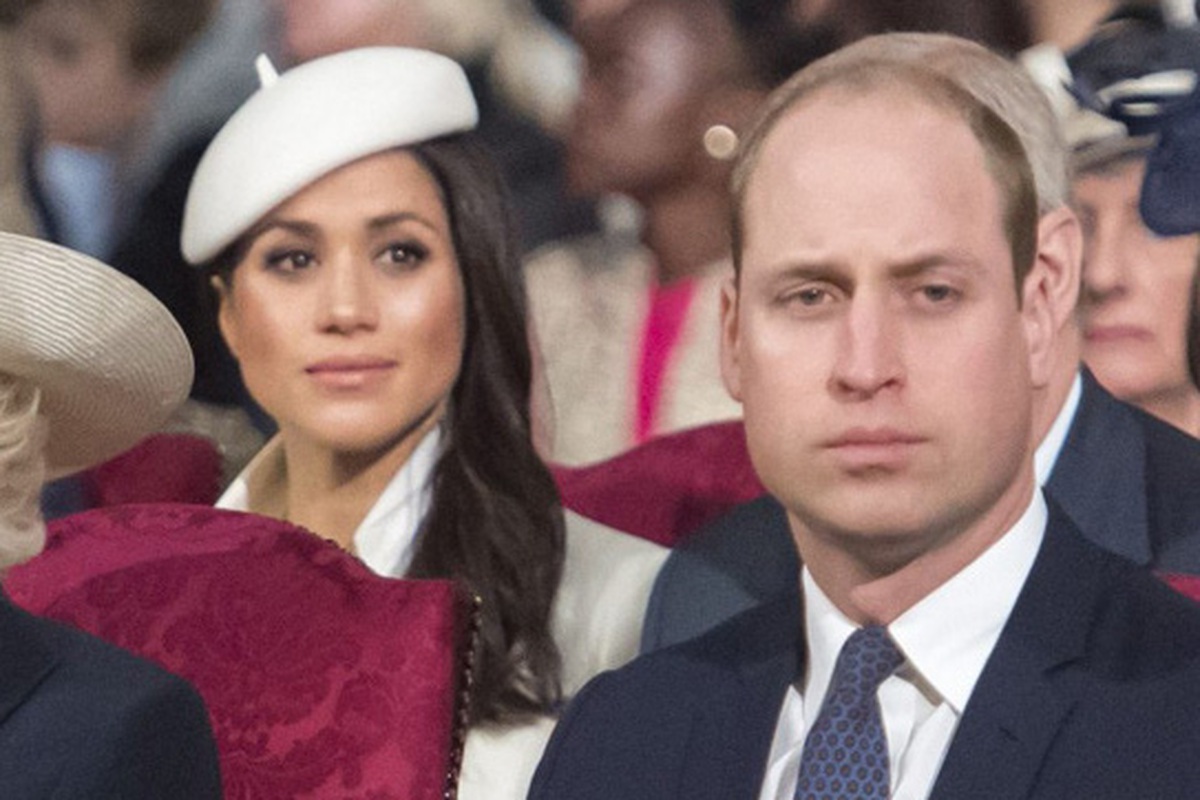
Adding another layer to the debate are accounts from palace insiders documented by Tom Quinn in Yes Ma’am: The Secret Life of Royal Servants. The book describes early awkwardness within the family, particularly around Meghan’s warm, tactile American-style greetings, which reportedly made William uncomfortable. Critics have retroactively interpreted those moments as flirtatious, while supporters argue they were simply cultural misunderstandings exaggerated by a rigid institution unused to informality.
Body language experts—some credentialed, others self-appointed—have weighed in heavily. One television commentator claimed Meghan’s gaze toward William carried “aspirational energy,” suggesting she appeared keenly aware of his position as heir to the throne. Meanwhile, the same analysts often describe her public interactions with Harry as affectionate but rehearsed, pointing to her frequent upward glances and supportive smiles as signs of deliberate presentation. “With Harry, she performs unity,” a royal watcher posted. “With William, she reveals curiosity.” Whether that assessment says more about Meghan or the observer remains an open question.
Public reaction has been sharply divided. Among critics, the moment reinforces a long-held belief that Meghan’s ambitions extended beyond marrying into royalty—toward aligning herself with the pinnacle of power. “The crown was always the prize,” one popular X account declared. “You can see it in her eyes.” Others go further, framing the glance as evidence of regret or rivalry. In these interpretations, the look symbolizes the path not taken: the influence, prestige, and global stature associated with the Prince of Wales.
Yet many reject this narrative outright. Supporters argue that projecting hidden motives onto a split-second glance reflects more about collective bias than individual intent. “It’s astonishing how a woman’s eye contact becomes a conspiracy theory,” one media columnist remarked during a recent broadcast discussion. “If she looks confident, she’s calculating. If she looks attentive, she’s scheming. There’s no neutral ground.” Advocates also point out that Meghan has consistently spoken of her deep bond with Harry, describing their partnership as grounded in shared values and mutual support.
The broader context cannot be ignored. Since stepping back from royal duties in 2020, Harry and Meghan have openly discussed their grievances in interviews and documentaries, while William has maintained a restrained public posture focused on his environmental initiatives and family life with Catherine. The distance between the brothers has amplified every archived interaction, turning minor gestures into symbolic evidence of fracture. A curt greeting at Commonwealth Day. Averted eye contact during a walkabout. A frozen smile caught on camera. Each is now part of an evolving narrative that audiences continue to reinterpret.
What makes this latest controversy particularly potent is its simplicity. No leaked memo, no explosive interview—just a look. The internet thrives on such ambiguity. It invites viewers to fill in the blanks, to ascribe motive where none is explicitly stated. “We see what we want to see,” a cultural analyst observed in a recent panel discussion. “Royal watching has become participatory storytelling.”
Whether the gaze in question signified admiration, awkwardness, or nothing at all may never be definitively answered. What is certain is that it has reignited debate about hierarchy, ambition, and the enduring fascination with royal dynamics. In a monarchy built on symbolism, even the smallest gestures are magnified. For critics, the eyes confirmed what they always suspected. For supporters, they reveal only the relentless scrutiny Meghan continues to endure.
In the end, the public has rendered its verdict long before any official explanation could matter. The moment lives online now, replayed and reframed endlessly. And as with so many royal controversies, the truth may be less dramatic than the narrative—but far less compelling.