Queen Victoria’s Legacy Illuminated: Princess of Wales Makes a Dazzling Statement in the Rare, Ruby-Accented Tiara
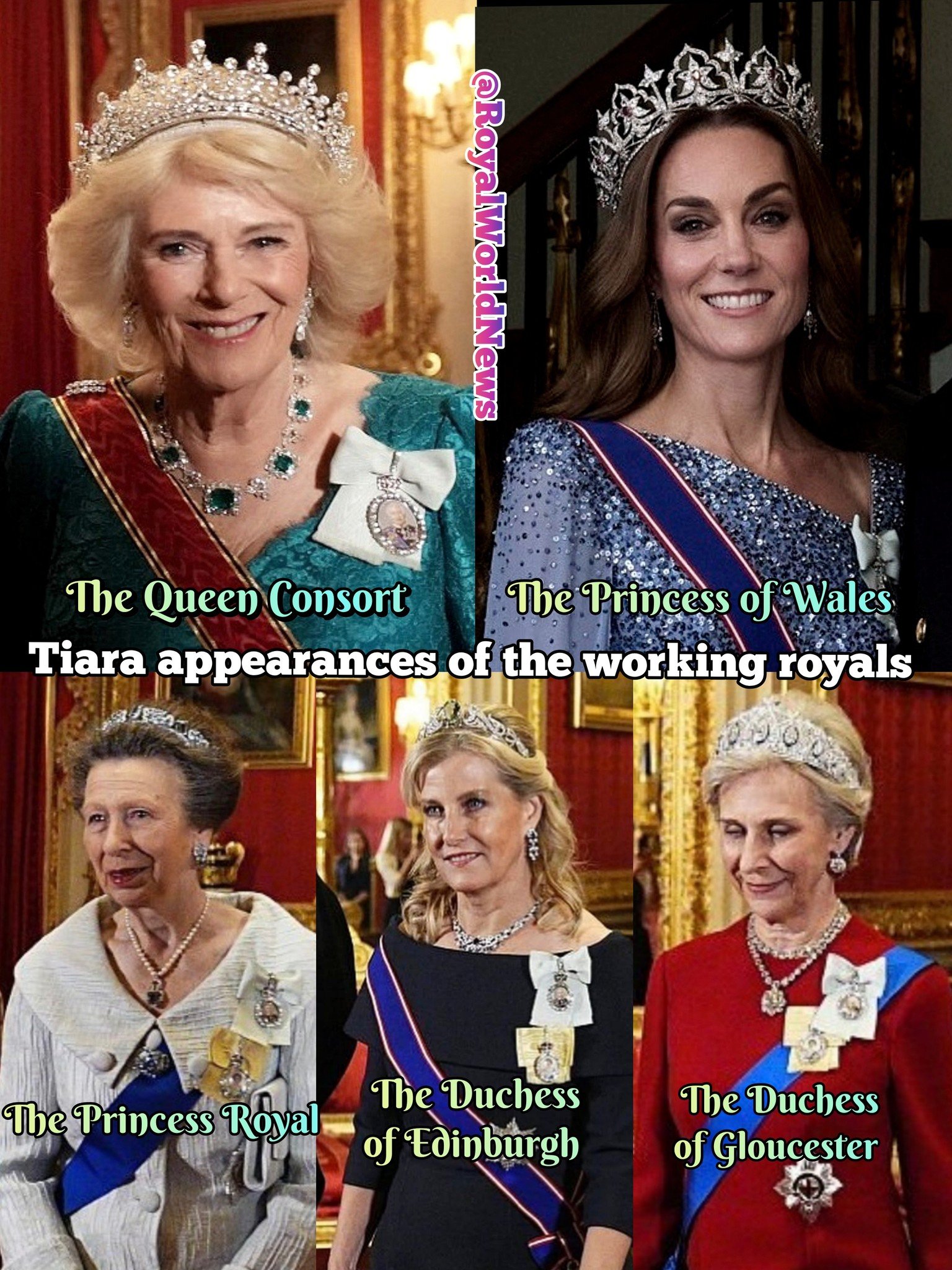
WINDSOR CASTLE, UK — In an evening steeped in international diplomacy and glittering royal pageantry, Catherine, the Princess of Wales, delivered a silent but powerful diplomatic statement. Attending the German State Banquet hosted by King Charles III and Queen Camilla in honour of President Frank-Walter Steinmeier and First Lady Elke Büdenbender, the Princess made a stunning debut in one of the most historically significant, yet rarely seen, jewels in the Crown Collection: Queen Victoria’s Oriental Circlet Tiara.
The appearance, which instantly stole the global spotlight, was more than just a magnificent fashion moment. It was a calculated decision to wear a piece that embodies the long, complex relationship between the British and German royal houses, and an honour to a jewel designed by a consort of German descent, Prince Albert. Catherine’s choice cemented her role as a graceful custodian of royal tradition and a dazzling centerpiece of the modern monarchy.
I. A Historical Tapestry: The Story of the Oriental Circlet
The tiara itself is a magnificent confluence of design, history, and royal narrative. It was originally conceived in 1853 by Prince Albert for his wife, Queen Victoria. Albert, himself a German prince, drew inspiration from the burgeoning fascination with global artistry, specifically the stunning Eastern jewelry displayed at the Great Exhibition of 1851 in London. The design features delicate ‘Mughal’ arches and lotus motifs, symbolizing the British Empire’s connection to the East, particularly India, from which the East India Company gifted the stunning diamond collection.
The original tiara was a breathtaking sight:
- Design: Seventeen distinctive ‘Mughal’ arches formed the circlet.
- Gemstones: It featured approximately 2,600 diamonds, dazzling in their complex settings.
- Centre Stones: Initially, the tiara was accented with precious, milky opals.
However, the tiara’s history includes a significant—and perhaps superstitious—alteration. When the jewel passed to Queen Alexandra, she famously did not share her mother-in-law’s affinity for opals, which were widely considered in the Victorian era to bring bad luck. Alexandra thus ordered the opals to be replaced with vibrant, deep rubies. She also reduced the number of arches to eleven, creating the slightly more streamlined, ruby-accented version seen today.
This modification transformed the tiara into the masterpiece of red and white fire that Catherine wore—a jewel that has endured for over 170 years, bearing the fingerprints of two formidable Queens.

II. The Rarity Factor: A Jewel of Unseen Splendour
The Oriental Circlet has always maintained an air of mystery due to its infrequent public appearances. While it was beloved by Queen Victoria and worn frequently during her widowhood (often with her miniature crown), subsequent Queens Consort chose other favourite pieces.
Most notably, Queen Elizabeth, The Queen Mother, only wore the tiara on select, official state occasions, preferring the comfort and familiarity of the Strathmore Rose or the Greville Tiara. During the reign of Queen Elizabeth II, the tiara was rarely seen in public, making it a true sleeping beauty of the Royal Collection.
For Catherine to select this particular tiara for the German State Banquet is highly significant:
- Honouring Albert: The tiara’s direct link to Prince Albert, the German-born Consort who revolutionized the British monarchy, is a subtle but potent diplomatic gesture during a German State Visit. It acknowledges the deep German roots intertwined with the British Royal Family’s history.
- Elevating the Occasion: Choosing a seldom-seen, historic tiara elevates the German State Banquet beyond a routine engagement, showcasing the highest level of respect and pomp afforded to their European partners.
- Statement of Status: By wearing one of the most imposing and architecturally complex pieces in the collection, Catherine asserts her seniority and importance as the Princess of Wales—the future Queen Consort.

III. Catherine’s Gown and Presence: A Vision of Regal Elegance
The tiara was perfectly complemented by the rest of Catherine’s ensemble, designed to deliver maximum impact under the brilliant lights of St George’s Hall at Windsor Castle.
While the exact details of her dress were often overshadowed by the tiara’s brilliance, the gown was reported to be a sweeping, floor-length creation, likely in a soft, elegant colour that allowed the rubies and diamonds of the Circlet to truly pop. Her choice of earrings and necklace would have been carefully selected to echo the diamond and ruby motifs, often incorporating pieces from the same collection or those with a complementary design.
The entire look—combining the weight of history with Catherine’s modern grace—created an aura of quiet authority and breathtaking beauty. The tiara, with its eleven ruby-topped arches, frames her face elegantly, enhancing her stature as she moved through the vast, festively decorated hall.
The backdrop to this dazzling debut was equally impressive. As previously noted, the banquet was held in St George’s Hall, which was adorned for Christmas, featuring a six-meter-tall Nordmann fir decorated with thousands of lights and shimmering gold and green ornaments. The sight of Catherine, adorned in one of Queen Victoria’s jewels, gliding past the immense Christmas tree, was pure royal cinema.