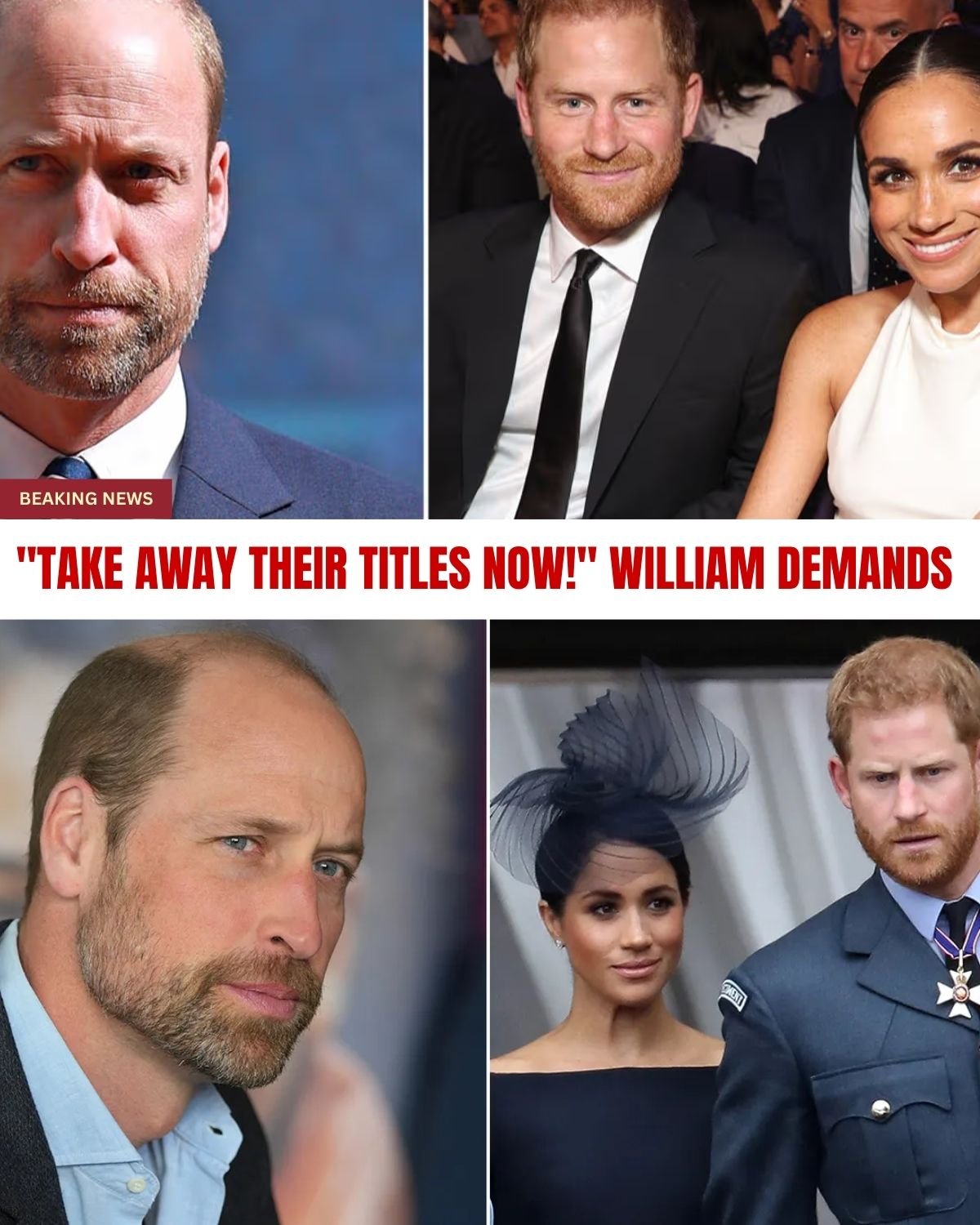
The debate over Prince Harry and Meghan Markle’s royal titles has reignited once again, as public controversy surrounding the couple continues to generate sharp reactions on both sides of the Atlantic.
In recent days, online discussion has surged after the Sussexes faced renewed criticism for comments touching on American political figures, including former President Donald Trump. While the couple no longer serve as working royals, their continued visibility — and the use of royal titles in public life — remains one of the most sensitive unresolved issues in modern monarchy.
Why Titles Remain Such a Flashpoint
When Harry and Meghan stepped back from senior royal duties in 2020, Buckingham Palace made clear that they would no longer represent the Crown in an official capacity.
However, they retained the titles of Duke and Duchess of Sussex, even as they built a new life in the United States through media deals, interviews, and public advocacy.
For critics, that combination has always been controversial: royal titles linked to a family institution, paired with private commercial and political activity far outside palace control.
Supporters argue that the couple have the right to speak freely as private citizens. Opponents counter that royal branding carries weight — and that weight comes with expectations of neutrality.
The Monarchy and Politics: A Strict Line
The British monarchy operates under a long-standing principle: it must remain above politics.
Royal family members are expected to avoid public involvement in partisan debates, particularly those involving foreign leaders, because even indirect political commentary can create diplomatic discomfort.
That is why any high-profile controversy involving Harry and Meghan often sparks the same question: can royals who have stepped away still keep their titles while speaking so openly?
Has Prince William Called for Titles to Be Removed?
Despite viral headlines and social media speculation, there is no confirmed public statement from Prince William demanding that Harry and Meghan’s titles be stripped over political remarks.
Royal insiders and commentators frequently discuss tensions within the family, but the palace rarely addresses such claims directly.
What is known is that Prince William has increasingly taken on a larger leadership role as Prince of Wales, and many observers believe he will shape the monarchy’s future with a more disciplined approach to public duty.
Whether that includes revisiting the Sussex titles remains uncertain.
Can Titles Actually Be Stripped?
Removing royal titles is not simple.
Under British law, most peerages can only be removed through an Act of Parliament, not simply by royal decision. That makes title removal a political and constitutional process — one the palace may prefer to avoid unless absolutely necessary.
In 2022, there were discussions in Parliament about mechanisms for removing titles, but no direct action has been taken against the Sussexes.
This legal complexity is one reason the issue remains unresolved despite repeated public debate.
A Growing Public Divide
Public opinion remains sharply split.
Some believe Harry and Meghan’s continued use of titles undermines the monarchy while they criticize royal life from abroad.
Others see the couple as independent figures who should not be punished for stepping away from an institution they found damaging.
Each new controversy reopens the divide — and the louder the debate becomes online, the more pressure it creates for palace strategists to manage perception.
What Happens Next?
For now, the Sussex titles remain intact.
But what is clear is that the monarchy is entering a new era — one where tradition collides with modern celebrity, media power, and global politics.
As King Charles continues his reign and Prince William prepares for the future, questions about the boundaries of royalty will not disappear.
The issue is bigger than one comment or one headline.
It is about what the Crown represents — and how much distance can truly exist between the institution and those who once stood at its center.