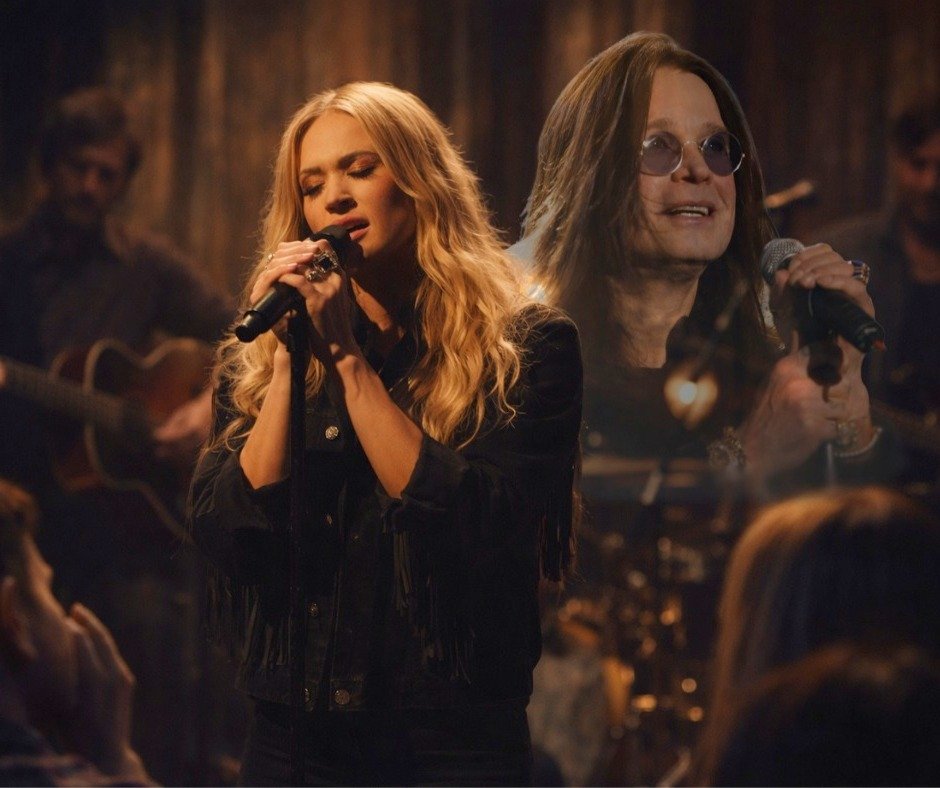
When Ozzy Osbourne passed away, the loss felt seismic. Not just for rock fans, but for anyone who grew up with a voice that sounded raw, haunted, defiant, and deeply human. Ozzy was never just a frontman or a genre icon — he was a feeling. And now, in the wake of his death, one performance has resurfaced that carries a new and unexpected weight.
In 2023, Carrie Underwood appeared on The Howard Stern Show and performed Mama, I’m Coming Home. At the time, it was received as a heartfelt cover — a country superstar honouring a rock legend she had long admired. Today, it feels like something else entirely. It feels like a farewell that arrived before anyone knew it would be needed.
A song already heavy with meaning
“Mama, I’m Coming Home” has always been one of Ozzy’s most vulnerable songs. Stripped of shock and darkness, it revealed regret, longing, and the ache of wanting to return to something pure and safe. Even in its original form, the song felt like a confession from a man who had lived too hard and loved too deeply.
Carrie Underwood didn’t try to reinvent it. She didn’t overpower it. Instead, she slowed it down emotionally. Her delivery was restrained, almost reverent. The performance felt less like a showcase of vocal ability and more like a conversation with the song itself.
At the time, listeners heard admiration. Now, they hear grief.
“I love Ozzy… how could you not?”
What made the performance especially poignant was Carrie’s open affection for Ozzy. She spoke candidly about growing up loving his music — even when people around her didn’t quite understand that admiration. Coming from a country artist often associated with polish and control, her respect for Ozzy’s raw honesty felt deeply sincere.
That sincerity is what makes the performance hurt differently now. Her voice doesn’t sound theatrical. It sounds careful. Almost fragile. Each lyric feels weighed down by meaning, as if she’s fully aware of the life behind the words.
Listening today, it’s hard not to hear the song as a quiet goodbye — not just from Carrie, but from an entire generation of artists who were shaped by Ozzy’s fearlessness.
When time rewrites a performance
Some performances age well. Others are transformed by events that come later. This is the latter.
Nothing about Carrie Underwood’s rendition has changed — the notes are the same, the arrangement untouched. But context has rewritten everything. Ozzy’s passing has turned the song into a final letter listeners didn’t know they’d be rereading.
Lines that once sounded hopeful now sound tender. Phrases about coming home feel eternal. The song no longer sits in the space between touring schedules and interviews — it now exists in memory.
A legacy carried forward
Ozzy Osbourne’s legacy was never just about darkness or rebellion. It was about honesty. About showing the mess, the mistakes, and the longing underneath the noise. That’s why this performance resonates so deeply now. Carrie didn’t just sing one of his songs — she protected its heart.
In a way, her voice became a bridge between worlds: rock and country, chaos and calm, youth and reflection. And now, after Ozzy’s death, that bridge feels like a place people want to stand for a moment longer.
Some songs don’t change.
But time changes how they hit.
And this one goes straight to the heart.