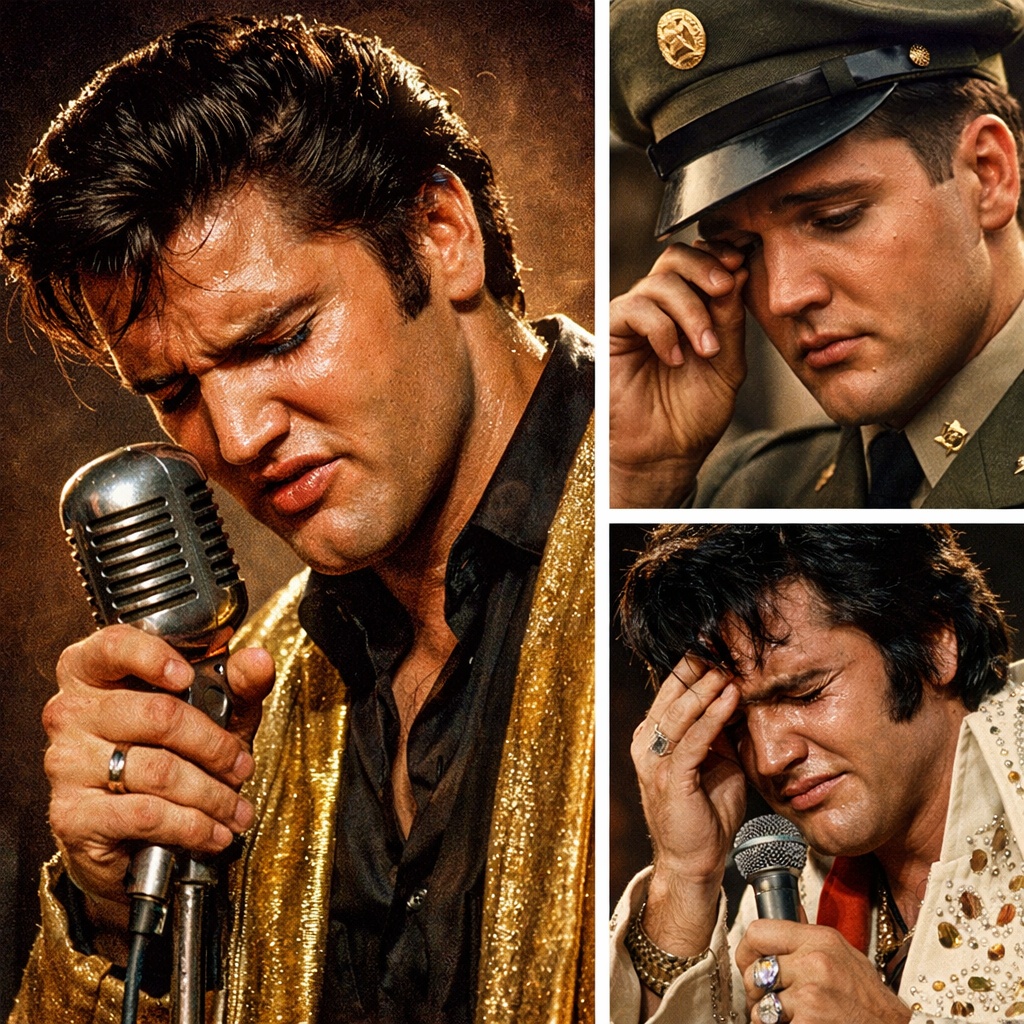
Did Elvis steal Black music — or force America to finally hear it?
Few debates in American culture are as emotionally charged — or as unresolved — as the question surrounding Elvis Presley and Black music. More than 45 years after his death, the argument still divides historians, musicians, and fans into opposing camps. One side calls him a cultural thief. The other calls him a cultural bridge. The uncomfortable truth is that both sides are partly right.
This is not a myth. It is a documented cultural collision.
The accusation: profiting inside a segregated system
Critics start with context — and context matters.
In the 1950s:
-
America was racially segregated
-
Black musicians were routinely blocked from mainstream radio
-
Television networks avoided Black performers for “mass appeal” reasons
Into this system walked Elvis — a white Southerner performing music rooted in:
-
Blues
-
Gospel
-
Rhythm & Blues
Genres pioneered almost entirely by Black artists.
When Elvis appeared on national television, hips swinging, voice soaked in gospel phrasing, he became acceptable where Black artists were not. His records sold in volumes his influences could not reach — not because the music was new, critics argue, but because the messenger was white.
This led to the central charge:
Elvis didn’t invent the sound — he inherited the profits.
Radio, TV, and the racial filter
The role of media cannot be ignored.
White radio stations:
-
Played Elvis constantly
-
Refused to play the same songs by Black artists
Television executives:
-
Booked Elvis for prime-time slots
-
Rarely invited Black rock-and-roll pioneers
The result was structural:
-
Elvis became the face of a sound created elsewhere
-
Black originators remained confined to “race records” charts
This imbalance fuels the cultural appropriation argument to this day.
The defence: Elvis never denied the source
Here’s where the narrative complicates.
Unlike many industry figures, Elvis:
-
Publicly named his influences
-
Spoke openly about learning from Black musicians
-
Never claimed authorship of the genre
He repeatedly said he learned music in:
-
Black churches
-
Beale Street clubs in Memphis
-
Gospel gatherings and blues halls
According to multiple interviews, Elvis described himself as a student, not a creator.
The voices that matter most: Black contemporaries
What makes this debate unusually complex is who defended Elvis — and how often.
BB King
BB King, one of the most respected voices in blues history, rejected the theft narrative outright:
“Elvis didn’t steal our music. He loved it.”
King emphasised that Elvis:
-
Spoke with admiration, not ownership
-
Brought attention to a sound America was already ignoring
-
Treated Black musicians as peers, not props
Little Richard
Little Richard’s stance was more conflicted — and more honest.
He acknowledged:
-
Elvis benefited from white privilege
-
But also credited Elvis with opening doors
Richard famously said Elvis was “an integrator”, not an imitator — someone who made it harder for the industry to deny the sound altogether.
Chuck Berry
Chuck Berry never accused Elvis of theft, but his silence on praise spoke volumes. Berry understood the business reality: Elvis succeeded where Berry struggled — not because of talent, but because of access.
Refusing segregation — quietly but firmly
One rarely discussed fact: Elvis refused to perform in segregated venues.
While not an activist in the modern sense, this decision mattered in the 1950s South. It cost money. It created friction. It placed him at odds with promoters.
This does not erase systemic inequality — but it complicates the idea that Elvis consciously exploited it.
The middle truth nobody likes
Here’s the reality historians increasingly agree on:
-
Elvis did benefit from a racist system
-
Elvis did not create the music he popularised
-
Elvis did acknowledge where the music came from
-
Elvis did not control the industry that elevated him
He was neither a villain nor a saviour.
He was a conduit — imperfect, privileged, sincere, and contradictory.
Why the debate never dies
This argument persists because it isn’t really about Elvis.
It’s about:
-
Who gets credit
-
Who gets paid
-
Who gets remembered
-
And how America processes race through fame
Elvis didn’t resolve that tension.
He exposed it.
Final thought
If Elvis had been Black, the music might have stayed underground.
If the music had stayed underground, America might have ignored it longer.
If America had ignored it longer, rock ’n’ roll would not be what it is today.
That doesn’t absolve the system.
But it explains why Elvis remains both symbol and scar — admired, criticised, and endlessly debated.
And that debate?
It’s not going away.