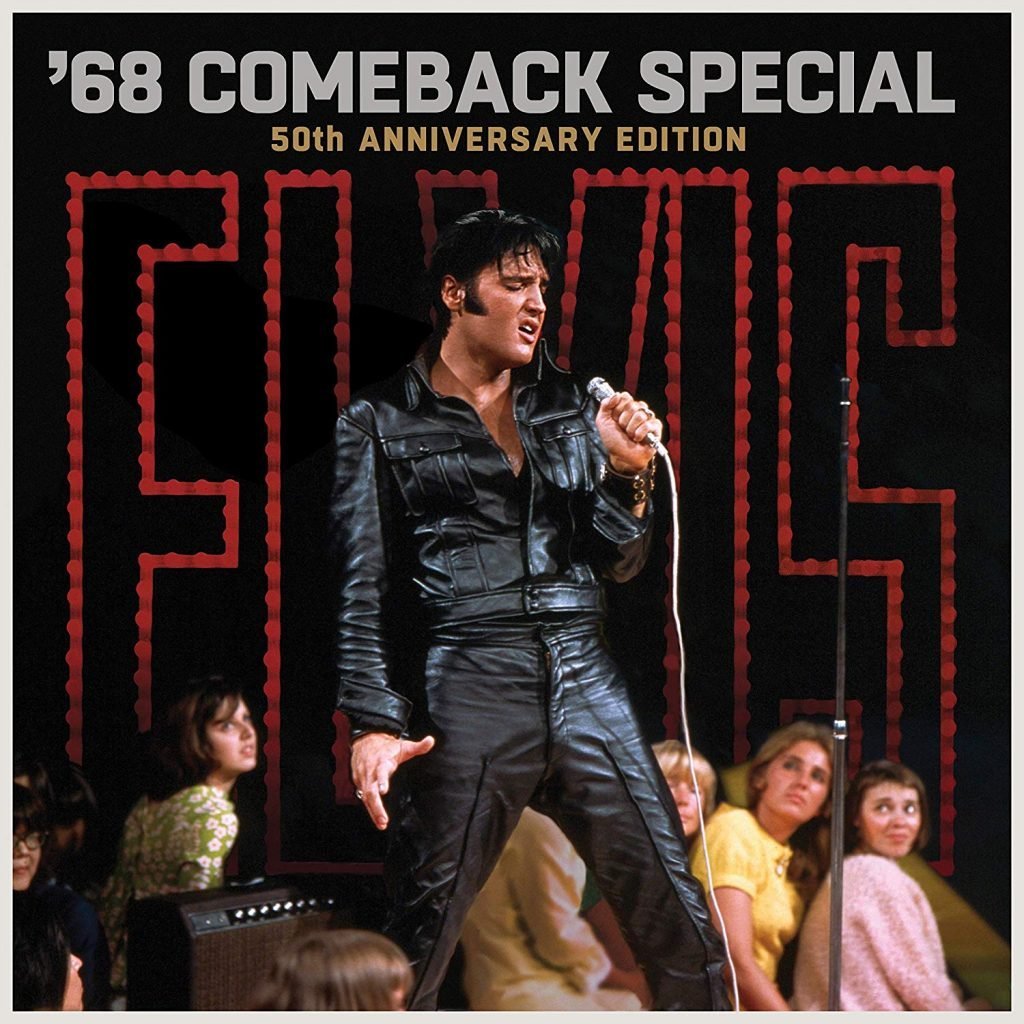
When Elvis Presley stood under the spotlight of the ’68 Comeback Special, no one expected that the final moments of the show would become a historic declaration. “If I Can Dream” was more than just a song. It was a cry from the heart of an artist long trapped in the past, desperately demanding his voice – and the voice of a divided America.
1968 was a year of chaos. The Vietnam War was escalating. Martin Luther King Jr. had just been assassinated. American streets were engulfed in violence and despair. Against this backdrop, Elvis – once considered an outdated entertainment icon – stepped onto the stage in black, his face tense, his eyes devoid of any pretense. He didn’t smile, he didn’t flirt, he didn’t pander to the audience. He confronted them.
“If I Can Dream” was written as a direct response to the death of Martin Luther King Jr. The lyrics are straightforward, without metaphors: “There must be peace and understanding someday…” When Elvis sang, it was no longer the smooth voice of a teen idol. It was a man grappling with his last vestiges of faith. Each line was like a punch to the silence, a desperate prayer that the dream of freedom and equality was not dead.
The camera zoomed in on Elvis’s face. Sweat glistened. His eyes were red. At the final climax, he almost screamed from his chest – technically imperfect, but emotionally brutal. And as the last note faded, Elvis stood still, breathing heavily, the white lights enveloping him like a purification ritual. It wasn’t the end of a television show. It was a rebirth.
“If I Can Dream” changed everything. It proved Elvis wasn’t just “The King” of rock ‘n’ roll, but an artist who dared to speak out. A man who understood that music could – and should – reflect the times. That moment not only saved Elvis’s career, it left a deep scar in the history of popular culture: when a song dared to dream, dared to demand, dared to hope amidst the ruins.