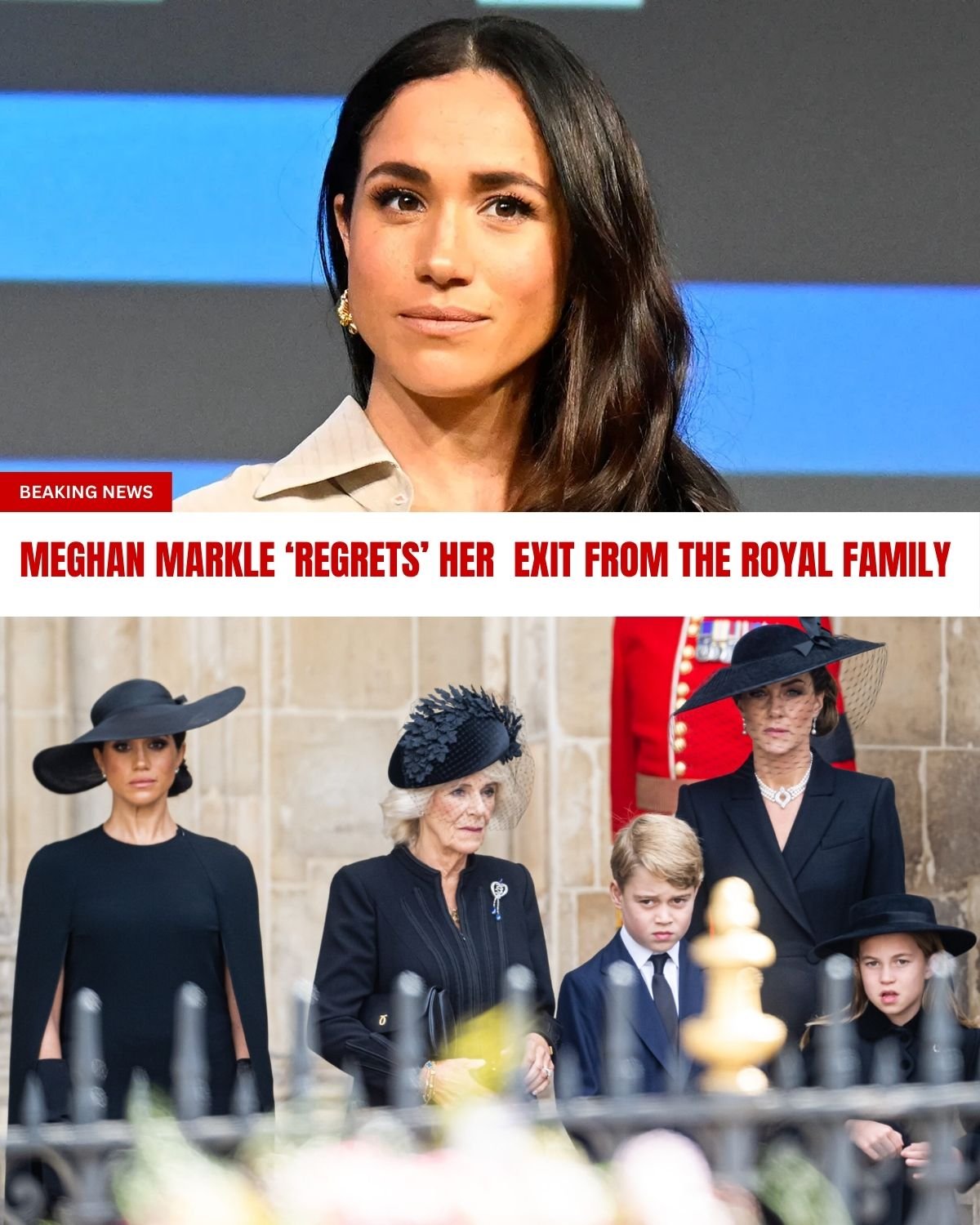
Four years have passed since Meghan Markle and Prince Harry stepped away from royal life in one of the most dramatic exits in modern British history. At the time, the move was framed as liberation — a break from rigid tradition, relentless scrutiny, and an institution they claimed no longer worked for them. Today, however, reports suggest that the aftermath of that decision is being viewed very differently behind closed doors.
According to multiple commentators and royal watchers, Meghan Markle is now said to be reflecting on how events unfolded — not just the decision to leave, but how it was handled, what was said publicly, and which relationships were permanently damaged along the way.
A departure that reshaped the monarchy’s modern image
When the Duke and Duchess of Sussex announced their departure in early 2020, the shockwaves were immediate. A senior royal stepping back was unprecedented in the modern era, but what followed went far beyond a quiet withdrawal. High-profile interviews, a bestselling memoir, documentaries, and repeated public criticisms of the institution ensured that the split remained front-page news for years.
For supporters, the couple were reclaiming their voice. For critics, the approach crossed an invisible line — transforming deeply personal family disputes into global media events. In Britain especially, public opinion hardened as royal duty, traditionally private and restrained, appeared to collide with Hollywood-style exposure.
The cost of speaking out
Much of the reported regret now centres not on leaving itself, but on the words that followed. Accusations, implied and explicit, reshaped public trust. While they brought sympathy in some quarters, they also burned bridges that are notoriously difficult to rebuild within royal circles.
Titles were effectively sidelined. Relationships with senior family members reportedly deteriorated beyond repair. Informal channels — once crucial for reconciliation — went quiet. For an institution built on continuity, discretion, and hierarchy, public criticism was seen less as reform and more as betrayal.
As one long-time royal commentator put it: “You can step away from the job, but not from the family — at least not without consequences.”
No clear route back
What makes the current moment particularly striking is the lack of a visible path forward. Reconciliation with the Royal Family would require more than time — it would require trust, silence, and humility. Yet the very public nature of the past four years makes any private reset extremely difficult.
Meanwhile, the post-royal life that was meant to offer freedom has proven unpredictable. Commercial ventures have had mixed results. Public perception remains polarised. Media attention, far from fading, continues to follow every move — but without the protective structure of the monarchy.
Britain’s verdict: consequence, not surprise
For many in the UK, the idea that regret might be setting in is not shocking. Public sentiment has long leaned toward the belief that turning family duty into public spectacle would eventually carry a price. In this view, the story is less about punishment and more about cause and effect.
Royal life, critics argue, demands restraint precisely because its power lies in symbolism, not self-expression. Once that balance is broken, it cannot easily be restored.
A lesson that lingers
Whether the reported reassessment leads to any change remains to be seen. What is clear is that the Sussex exit has become a case study in modern fame, family, and consequence — watched closely by both supporters and sceptics.
Four years on, the headlines may be quieter, but the implications are louder than ever. Some decisions reshape not just a moment, but an entire future. And once made, they rarely offer an undo button.