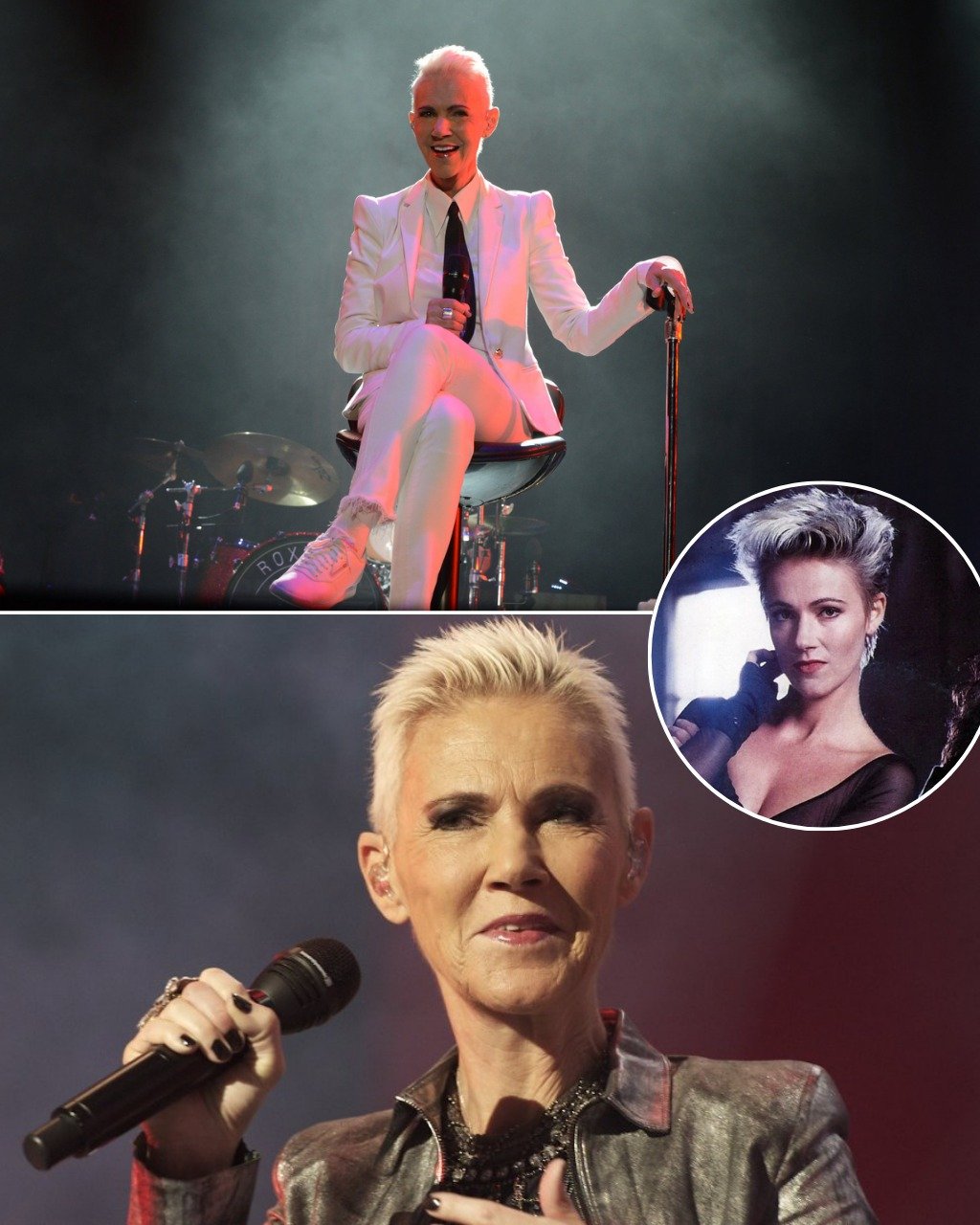
Marie Fredriksson, a name that once echoed through stadiums and radio waves, now resonates with a haunting silence.
Her journey from the vibrant heights of pop stardom with Roxette to the depths of personal tragedy is a tale woven with triumph, heartache, and an indomitable spirit
In 1986, they united to form Roxette, a duo destined for greatness.
Their first album, Pearls of Passion, was a modest success, but it was their second album, Look Sharp!, that would catapult them into the stratosphere of fame
The turning point came when an American exchange student discovered their music and brought it back to the United States.
The single “The Look” ignited a wildfire of popularity, marking the beginning of a global phenomenon.
Suddenly, Marie was not just a local star; she was an international icon.
With hits like “Listen to Your Heart,” “Joyride,” and “It Must Have Been Love,” Roxette dominated the charts.
Marie’s spiky platinum hair and powerful voice became synonymous with the sound of the late ’80s and early ’90s.
As Roxette toured the world, performing to millions, Marie’s life seemed like a fairy tale.
Yet, behind the glitz and glamour lay a reality that few could fathom.
The pressures of fame, the relentless touring, and the demands of the music industry began to take their toll.
In the midst of her success, Marie found solace in her family life, marrying musician Mikael Bolyos and welcoming two children into the world.
However, in September 2002, tragedy struck.
Marie Fredriksson collapsed at home, a moment that would change her life forever.
The diagnosis was devastating: a malignant brain tumor.
The prognosis was grim, and the world held its breath as she underwent surgery, chemotherapy, and radiation.
The battle for her life was brutal, leaving her with permanent damage.
Vision loss, hearing impairment, and a struggle to relearn basic skills became her new reality.
For years, Marie vanished from the public eye, focusing on recovery.
She turned to art as therapy, using drawing to reconnect with herself and her music.
The world had not forgotten her, but Marie was determined to reclaim her life on her own terms.
In 2004, she released The Change, an autobiographical album that laid bare her fears and struggles.
It was a raw, emotional testament to her resilience, a declaration that she would not be defined by her illness.
In 2009, during a concert by Per Gessle, Marie made a surprise return to the stage.
The moment was electric, filled with a mix of joy and trepidation.
As she walked onstage, her presence reignited the spark of Roxette.
The fans erupted in applause, a wave of love and support enveloping her.
This moment marked the beginning of a remarkable comeback.
Between 2011 and 2016, Roxette toured the world again, releasing new music, including the album Good Karma.
Yet, the physical toll of performing was undeniable.
Marie often needed to sit or lean on the microphone stand, a stark reminder of her struggle.
Each performance became an act of defiance, a tribute to the fans who had stood by her through thick and thin.
Despite the challenges, Marie continued to sing, her voice a powerful reminder of her spirit and determination.