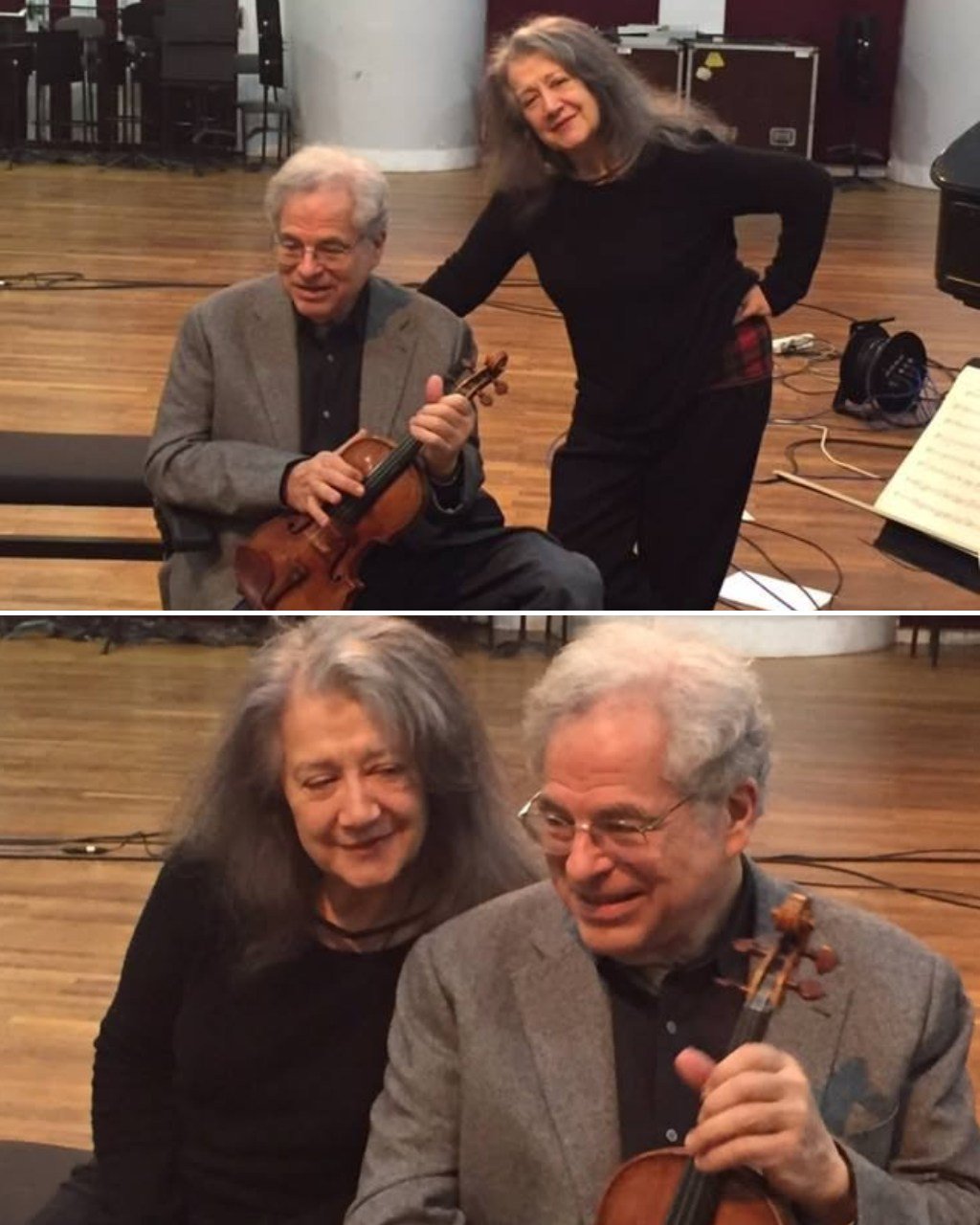
In a moment that feels nothing short of historic for classical music, Itzhak Perlman and Martha Argerich have recorded their first-ever studio album together, marking a long-awaited reunion between two of the greatest musicians of the modern era.
On that momentous occasion, Perlman and Argerich performed Beethoven’s “Kreutzer” Sonata, the Franck Violin Sonata, and Schumann’s Violin Sonata No. 1 — repertoire that demands not only technical mastery, but a rare level of trust and musical dialogue between performers. The Beethoven and Franck sonatas were released in 1999 by EMI Classics (now Warner Classics), and for more than two decades, those recordings stood as the only documented collaboration between the two legends.
Until now.
This new studio album is more than a recording — it is a convergence of lifetimes. Perlman’s golden, singing tone and deeply human phrasing meet Argerich’s volcanic energy, rhythmic daring, and unmistakable pianistic voice in a setting that allows for intimacy, precision, and reflection that only the studio can offer. For fans who have long dreamed of hearing these two artists reunite under controlled, carefully shaped conditions, the release represents the fulfillment of a near-mythic wish.
What makes the reunion especially powerful is the passage of time itself. Both artists have lived full musical lives since their last collaboration, carrying with them decades of experience, insight, and emotional depth. This album does not attempt to recreate the past — it revisits it with wisdom.
In an era when true artistic partnerships are increasingly rare, the return of Itzhak Perlman and Martha Argerich to the studio feels like a reminder of what classical music can achieve at its highest level: conversation without words, mutual respect without ego, and interpretation shaped by trust.
It has been 18 years since their last recording collaboration — a live recital captured at the Saratoga Performing Arts Center in 1998. That legendary performance brought together two titans at the height of their interpretive powers, tackling three of the 19th century’s most ambitious and emotionally demanding works for violin and piano.