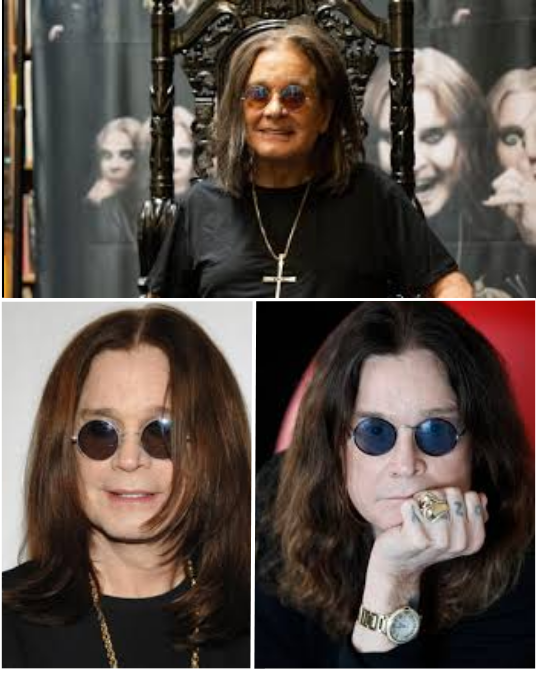
When the world says goodbye to a legend, it chooses its words carefully. But with Ozzy Osbourne, the music did the talking — loud, unfiltered, and unforgettable.
Born John Michael Osbourne in Birmingham, England, Ozzy didn’t start life with a spotlight. He left school early, worked manual jobs, and turned to music as the only thing that felt like freedom in a world that offered little else. What emerged from that struggle wasn’t just a singer — it was a voice that would define a genre.
The Birth of Heavy Metal
In the early 1970s, Ozzy and his band Black Sabbath shocked the world. With grinding riffs, dark themes, and a stage presence unlike anything before it, Black Sabbath helped create what would become heavy metal — a musical force felt by generations. Ozzy’s unmistakable voice, raw and haunting, was the beating heart of that sound.
But Ozzy’s story was never just about riffs and records. His journey through fame was chaotic, controversial, and wildly human. From substance struggles to headline-grabbing antics, he became one of rock’s most infamous figures — yet also one of its most beloved.
A Solo Star and Cultural Phenomenon
Leaving Black Sabbath didn’t slow him down. Ozzy’s solo work, beginning with Blizzard of Ozz and hits like “Crazy Train” and “Mr. Crowley,” solidified his impact as a solo act. His music wasn’t just loud — it was emotionally raw, connecting with listeners who felt the world’s weight themselves.
In the 2000s, a whole new audience discovered Ozzy through The Osbournes, the MTV reality show that revealed him as… well, himself — confused, funny, loving, and unpredictably human. That series didn’t just entertain; it reshaped how musicians could connect with fans outside the stage.
The Final Show and Farewell
Even as health challenges mounted, Ozzy refused to vanish quietly. Diagnosed with Parkinson’s disease after a serious fall, he battled through surgeries, mobility issues, and the physical limits that come with age.
On July 5, 2025, at Villa Park in Birmingham — near where Black Sabbath was born — Ozzy and his original bandmates reunited for “Back to the Beginning,” his final concert. Seated on a throne due to his condition, he delivered a moment that was equal parts triumphant and tender, honoring his roots and his fans one last time.
Just 17 days later, on July 22, 2025, Ozzy Osbourne died at the age of 76, surrounded by family. Official records list his death as caused by cardiac arrest with contributing factors including coronary artery disease and Parkinson’s disease.
Legacy Beyond the Stage
Ozzy Osbourne didn’t just influence music — he reshaped it. He was inducted into the Rock & Roll Hall of Fame both as a member of Black Sabbath and as a solo artist, a rare honor reflecting his broad impact.
Tributes poured in from across the music world, with artists from Metallica and Pearl Jam to Elton John famously honoring him for his influence, friendship, and humor.
His legacy has also taken on symbolic life beyond music — from a Triceratops skull named in his honor to posthumous civic awards in his hometown recognizing his cultural impact.
The Heartbeat of Metal
Ozzy was never polished. He was raw, unpredictable, wildly human — and completely unforgettable. In every chilling riff, every howl at the moon, and every laugh shared with family on TV, he reminded the world that rock wasn’t just sound… it was feeling.
His music wasn’t just loud.
It was living.
And that’s why Ozzy Osbourne — the Prince of Darkness — will never truly be gone.