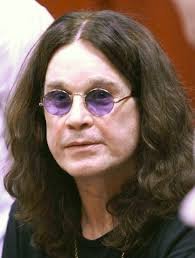
Few names in music carry the weight, shock, and legend of Ozzy Osbourne.
For more than half a century, Ozzy wasn’t just a rock star — he was an era. A symbol. A storm. From the birth of heavy metal with Black Sabbath to his improbable reinvention as a solo icon, Ozzy’s life has always felt larger than reality.
But what makes his story truly unforgettable isn’t just the darkness, the controversy, or the wild myth surrounding him.
It’s the fact that he endured.
A Voice That Changed Music Forever
When Black Sabbath emerged from Birmingham in the early 1970s, the world wasn’t ready.
The sound was heavier. Darker. More haunting than anything mainstream audiences had heard. Ozzy’s voice — eerie, vulnerable, and unmistakable — became the perfect instrument for a new genre that would soon be called heavy metal.
Songs like “Paranoid,” “Iron Man,” and “War Pigs” didn’t just entertain. They reshaped rock music’s DNA.
Ozzy didn’t just sing over riffs — he haunted them.
The Chaos… and the Survival
Ozzy’s career has always been intertwined with chaos. The headlines followed him everywhere: outrageous stage moments, battles with addiction, and a public image that often blurred into legend.
Many artists would have burned out.
Ozzy somehow kept going.
Behind the wild persona was something deeper: an artist who never stopped chasing music, even when life threatened to swallow him whole.
His solo career proved it.
With albums like Blizzard of Ozz and songs like “Crazy Train” and “Mr. Crowley,” Ozzy didn’t fade after Sabbath — he became even bigger.
He turned personal darkness into soundtracks for millions.
The Man Behind the Myth
As time passed, fans began seeing another side of Ozzy.
Not just the Prince of Darkness… but the man.
A husband. A father. A survivor.
Reality television introduced him to an entirely new generation, showing a strangely endearing figure behind the heavy-metal madness — confused, funny, human.
Ozzy was never polished. That was the point.
He was real in a world built on performance.
Health Battles and Unbreakable Will
In recent years, Ozzy’s health struggles became impossible to ignore.
He publicly revealed his Parkinson’s diagnosis, speaking with surprising honesty about the physical challenges he faced. Touring became harder. His body weakened, even as his voice remained powerful.
Still, Ozzy refused to surrender.
He continued recording. Collaborating. Appearing when he could.
He made it clear: music wasn’t something he did.
It was something he was.
One of his most heartbreaking statements came when he admitted that while his voice was still strong, his body could no longer keep up with the life he wanted.
Yet even then, he never stopped being Ozzy.
Why Ozzy’s Legacy Will Never Die
Ozzy Osbourne didn’t just influence rock music.
He influenced culture.
Metal bands, punk artists, pop stars, and alternative musicians have all cited him as foundational. His impact isn’t limited to one genre — it’s written into the history of modern music itself.
What made him immortal wasn’t perfection.
It was persistence.
Ozzy represented the messy truth of being human: flawed, fierce, vulnerable, unforgettable.
The Final Word
Ozzy Osbourne was never meant to last this long.
And maybe that’s what makes his story so powerful.
Through decades of noise, darkness, controversy, illness, and triumph, he remained standing — a voice that refused to be silenced.
The Prince of Darkness didn’t fade away.
He became permanent.
Because legends don’t disappear.
They echo.