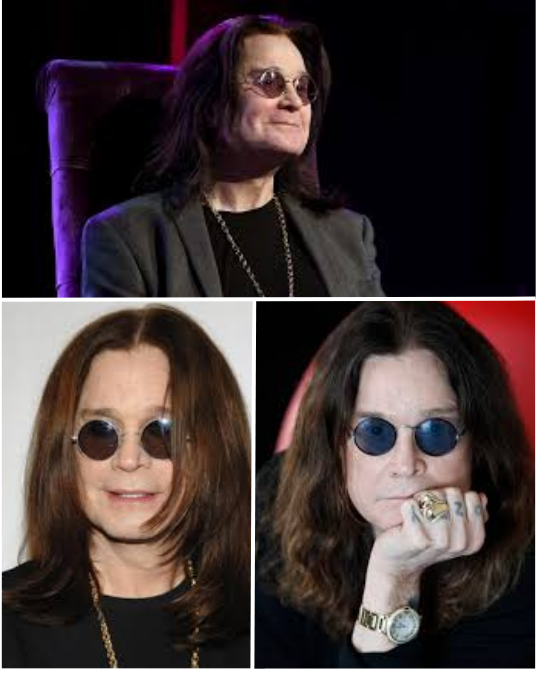
When people talk about the greatest legends in rock history, one name rises above the noise again and again: Ozzy Osbourne. He wasn’t just a singer. He wasn’t just a celebrity. Ozzy was a cultural force — a man who helped shape an entire genre, transformed music forever, and became the face of heavy metal’s most iconic era.
To understand why Ozzy was truly the best of his time, you have to look beyond the headlines and the wild stories. You have to look at what he gave the world: sound, rebellion, emotion, and a legacy that no one else has ever been able to replicate.
The Birth of Heavy Metal Began With Ozzy
Before Ozzy Osbourne, rock was loud — but it wasn’t dark. It wasn’t heavy in the way we know it today. When Ozzy joined Black Sabbath in the late 1960s, music changed permanently. Together, they created something entirely new: heavy metal.
Songs like “Paranoid,” “Iron Man,” and “War Pigs” weren’t just hits — they were seismic shifts. Ozzy’s haunting voice paired with Sabbath’s crushing riffs became the blueprint for generations of metal bands to come.
Without Ozzy, metal as we know it may not even exist.
A Voice That Could Not Be Mistaken
Ozzy didn’t have the polished voice of a traditional pop star, and that was the point. His vocals were eerie, emotional, almost otherworldly. You could hear one note and know instantly: that’s Ozzy.
His voice carried pain, chaos, power, and vulnerability all at once. It wasn’t just singing — it was storytelling from the edge.
In an era full of loud performers, Ozzy stood out because his sound was unmistakably his own.
The Ultimate Survivor of Rock History
Ozzy’s life was famously turbulent. Addiction, controversy, health struggles, career setbacks — most artists would have been finished after one chapter of what Ozzy lived through.
But that’s exactly why he became a legend.
He didn’t just survive. He returned stronger.
His solo career after Black Sabbath proved that he wasn’t a one-band phenomenon. Albums like Blizzard of Ozz and Diary of a Madman introduced classics like:
-
“Crazy Train”
-
“Mr. Crowley”
-
“Flying High Again”
Ozzy reinvented himself and dominated a second era of rock.
A Stage Presence Like No Other
Ozzy wasn’t simply performing — he was commanding. Every concert felt like an event, a ritual, a moment in history. Fans didn’t just watch Ozzy. They experienced him.
He had the rare ability to make thousands of people feel connected, united by the raw electricity of music.
Even in his later years, his presence remained larger than life.
More Than Shock — A Real Artist
Yes, Ozzy was known for outrageous moments. The media loved the chaos, the myths, the “Prince of Darkness” persona.
But behind all of that was something deeper: a real musician who poured genuine emotion into his work.
Ozzy’s songs weren’t just rebellion — they were often about fear, loneliness, war, struggle, and survival. His music spoke to outsiders, misfits, and anyone who felt the world was too heavy.
He gave people a voice when they had none.
A Legacy That Will Never Fade
Ozzy Osbourne wasn’t just the best in his era — he was one of the few artists who defined his era.
His influence is everywhere:
-
Every heavy metal band that followed
-
Every dark rock anthem that came after
-
Every performer who embraced being different
-
Every fan who found strength through music
Ozzy wasn’t just part of rock history.
He was rock history.
The Final Chapter Only Made Him Greater
As Ozzy aged and faced serious health challenges, fans saw something even more powerful than the wild rockstar image: resilience.
He continued to show up. He continued to fight. He continued to give music to the world even when it cost him everything.
That’s what makes him unforgettable.
Not just the darkness. Not just the madness.
But the heart underneath it all.
Conclusion: Why Ozzy Was the Best
Ozzy Osbourne was the best of his era because he wasn’t manufactured. He wasn’t safe. He wasn’t ordinary.
He was raw, real, groundbreaking, and eternal.
He gave the world heavy metal.
He gave millions of fans an identity.
And he left a legacy no one can replace.
The Prince of Darkness didn’t just live through rock’s greatest era…
He created it.