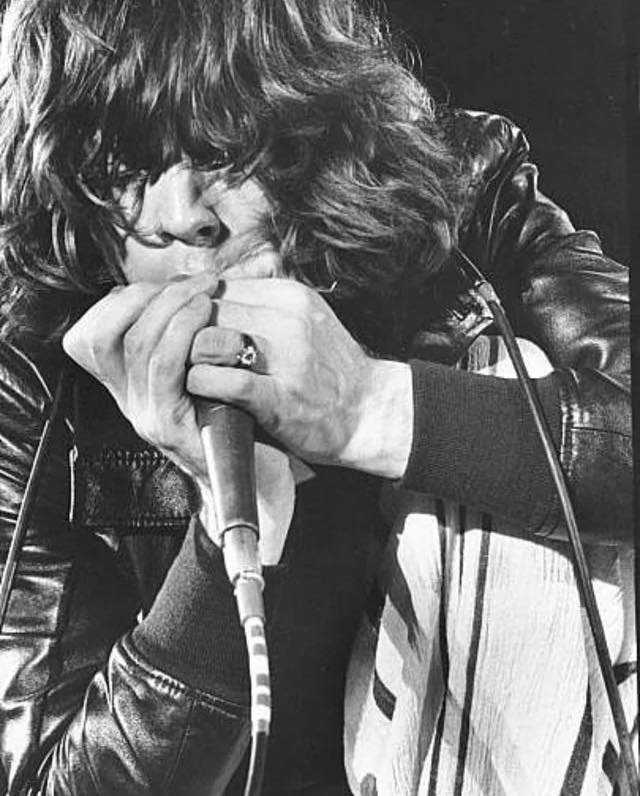
When people think of Mick Jagger, they usually picture the swagger, the voice, the relentless stage presence. Far less discussed — but just as influential — is his harmonica playing, a thread that runs quietly through some of the most recognisable songs by The Rolling Stones.
From the very beginning, the harmonica was central to the Stones’ identity. Before stadiums and global superstardom, the band was a London blues outfit, deeply immersed in American blues records. Jagger didn’t pick up the harmonica as a novelty — he treated it as a serious blues instrument, one capable of carrying grit, rhythm, and emotion equal to the guitar.
Learning from the blues masters
Jagger’s harmonica style was heavily inspired by British blues pioneer Cyril Davies, whose raw, aggressive approach to blues harp left a lasting impression on the young Stones frontman. Davies showed that the harmonica could be loud, abrasive, and confrontational — not polite or ornamental.
Even deeper was Jagger’s admiration for American blues legend Jimmy Reed. Reed’s hypnotic, repetitive harmonica lines — simple but deeply grooving — became a blueprint. Jagger studied those records obsessively, absorbing the feel rather than just the notes. You can hear Reed’s influence clearly in the Stones’ early recordings, where the harmonica doesn’t just decorate the song — it drives it.
Defining early Rolling Stones records
On tracks like Little Red Rooster, Not Fade Away, and I’m a King Bee, Jagger’s harmonica is front and centre, often functioning as a lead instrument. In some cases, it replaces what would traditionally be a guitar solo, reinforcing the band’s devotion to the blues at a time when British pop was still relatively clean-cut.
As the Stones evolved, the harmonica remained a key texture. Songs like Midnight Rambler, Gimme Shelter, and Miss You show how Jagger adapted his playing — sometimes aggressive and snarling, sometimes atmospheric and restrained. It became a tool for mood as much as melody.
A singer who thinks like an instrumentalist
What makes Jagger’s harmonica playing especially effective is that he approaches it like a vocalist. His phrasing mirrors the human voice — bending notes, dragging phrases, leaving space. This instinctive musicality allows the harmonica to converse naturally with the lyrics rather than compete with them.
Unlike technically flashy harmonica virtuosos, Jagger prioritises feel and placement. He knows when to push forward and when to pull back, a skill that comes from deep listening and decades of performance rather than formal training.
An overlooked part of his legacy
In the broader story of rock history, Mick Jagger’s harmonica work is often overshadowed by his frontman persona and songwriting partnership. Yet without it, the Rolling Stones would sound fundamentally different — especially in their formative years.
The harmonica helped ground the band in blues authenticity, separating them from their contemporaries and giving their music a raw edge that still resonates today. It wasn’t just an influence — it was a foundation.
Quietly, persistently, and unmistakably, Mick Jagger’s harmonica helped shape the sound of the Stones.