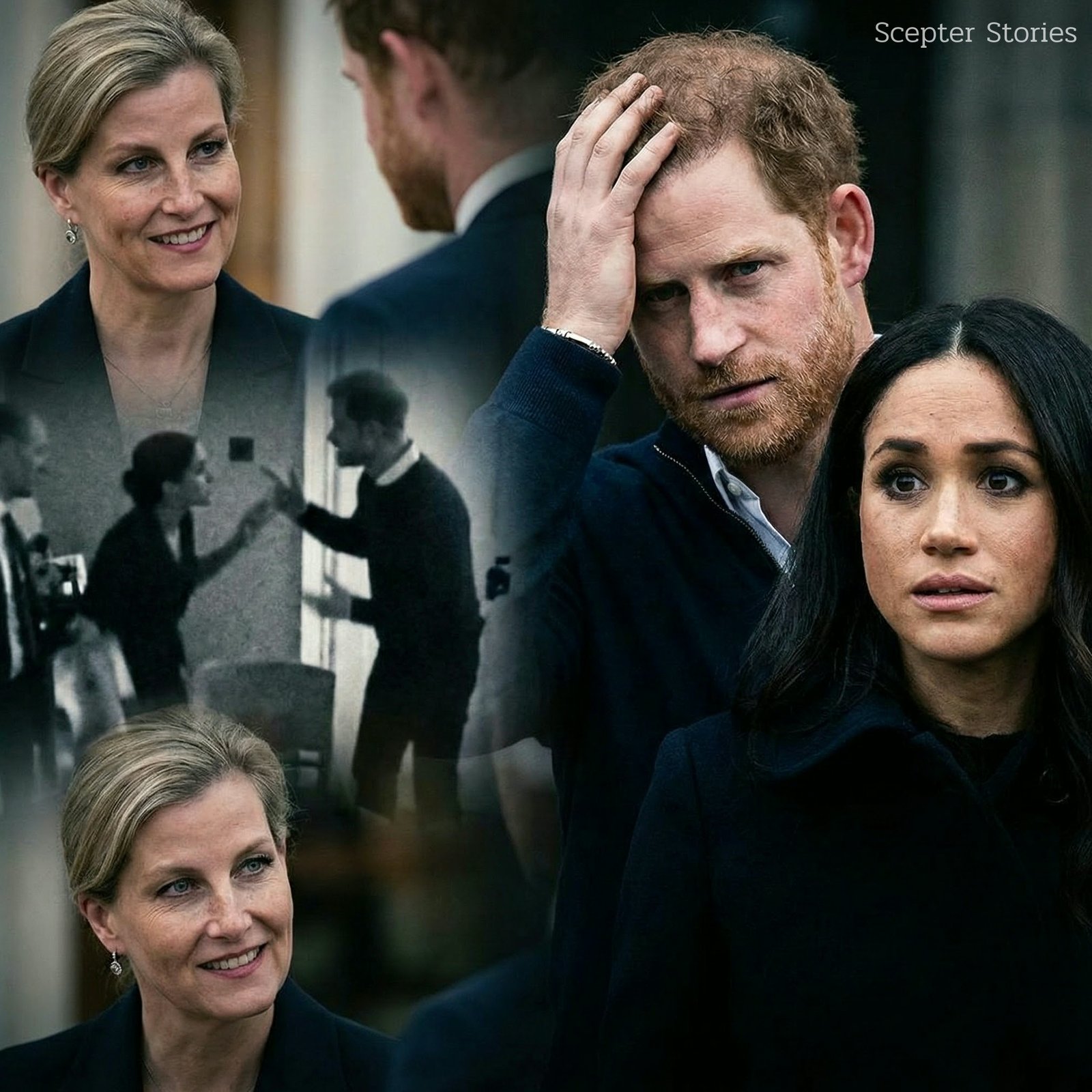
In the era of clickbait and social media firestorms, certain headlines have an almost instant impact — and the recent viral claim that a dramatic on-air clash “ended” Meghan Markle’s hopes of a royal comeback is a perfect example.
The original headline — “THE ROYAL FANTASY IS DEAD — AND TONIGHT, EVERYBODY SAW WHO SWUNG THE FINAL AXE” — reads like something out of a gladiatorial arena. Duchess Sophie, Meghan Markle, Prince Harry: these are names that dominate tabloid attention, and when combined with language like “final blow,” “no one cares anymore,” the result is a story built more for shock value than substantiated reporting.
But what’s really going on?
The Anatomy of a Sensational Headline
It’s worth breaking down the elements that make this headline so compelling:
-
High stakes language: Words like “dead,” “final axe,” “swing,” and “fire” evoke violence and closure.
-
Familiar characters: Meghan Markle and Prince Harry remain perennial tabloid figures. Adding a royal figure — here “Duchess Sophie” — gives the story instant context.
-
Conflict and emotion: The suggestion of an on-air confrontation, emotional reactions, and definitive endings are exactly the elements that drive clicks.
But headlines are not reporting. They are advertising copy designed to make you click.
What’s Verifiable — and What Isn’t
As of now, there is no credible evidence from reputable news outlets that Meghan Markle has been publicly confronted on live television by a member of the royal family, nor that any “final blow” was struck that ends her place in the public eye.
Royal commentators and mainstream media have long noted that tabloids often recycle narratives about tensions within the monarchy, especially involving the Sussexes, but such stories rarely reflect confirmed events.