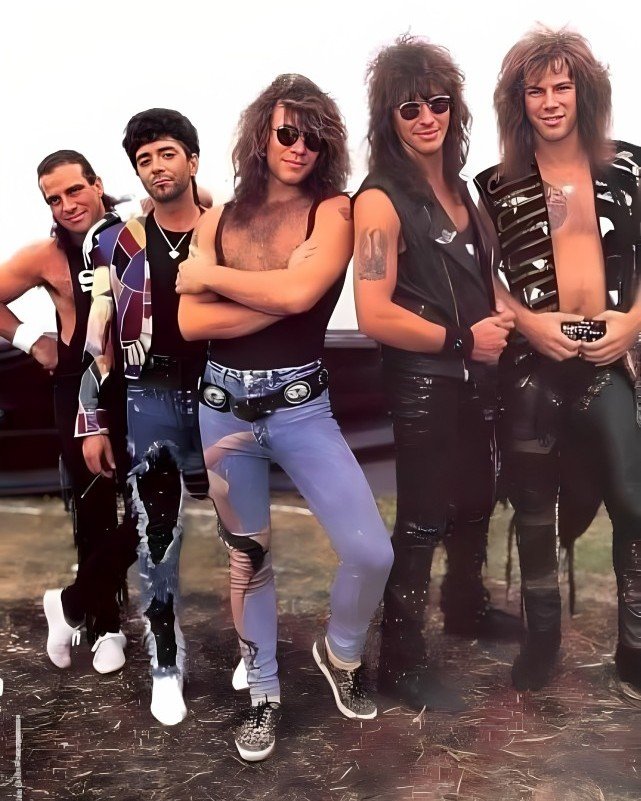
In the late 1980s, before streaming, before social media, before algorithms decided what people should hear — there was Bon Jovi. And for a generation, they weren’t just a band. They were the sound of freedom, youth, and stadiums shaking under the weight of shared emotion.
This was the era of Slippery When Wet and New Jersey — records that didn’t just top charts, but owned them. The original lineup stood at the center of it all: Jon Bon Jovi’s unmistakable voice, Richie Sambora’s soaring guitar work, Tico Torres’ thunderous drums, David Bryan’s keys filling the air, and Alec John Such holding it all together. Together, they weren’t just performing songs — they were creating moments that millions would carry for life.
Every show felt massive. Lighters in the air. Voices screaming lyrics back louder than the band itself. Songs like Livin’ on a Prayer, You Give Love a Bad Name, and Wanted Dead or Alive became anthems of hope, rebellion, and belief — anthems for anyone who ever wanted more from life. Bon Jovi didn’t just sing about dreams; they made people believe theirs were possible.
What made that era special wasn’t only the sound — it was the connection. The band stood at the perfect crossroads between raw rock energy and emotional honesty. They looked larger than life, yet somehow felt close, like they were singing directly to you. That balance turned concerts into communal experiences and fans into lifelong followers.
Looking back now, that version of Bon Jovi represents something rare: a moment when music united people across countries, generations, and backgrounds. When guitars ruled the airwaves, when choruses were sung at the top of your lungs, and when rock felt unstoppable.
Decades later, those songs still hit the same — loud, proud, and full of heart.
Because some bands don’t just define an era…